



2021 01 Fostering Biodversity Data Sharing in the WIO Policy Brief English


Die ZMT Policy Briefs (siehe Drop-Down Liste unten) sind Teil einer Reihe von Kurzdossiers mit dem Ziel, politische Entscheidungsträger über die Forschung am ZMT zu informieren und konkrete umweltpolitische Empfehlungen zu formulieren.

Die Policy Briefs veranschaulichen die hohe praktische sowie politische Relevanz der ZMT-Forschung für das Management von tropischen Küstengebieten. Jeder Policy Brief wird auf Englisch veröffentlicht und gegebenenfalls in der Sprache des Partnerlandes.


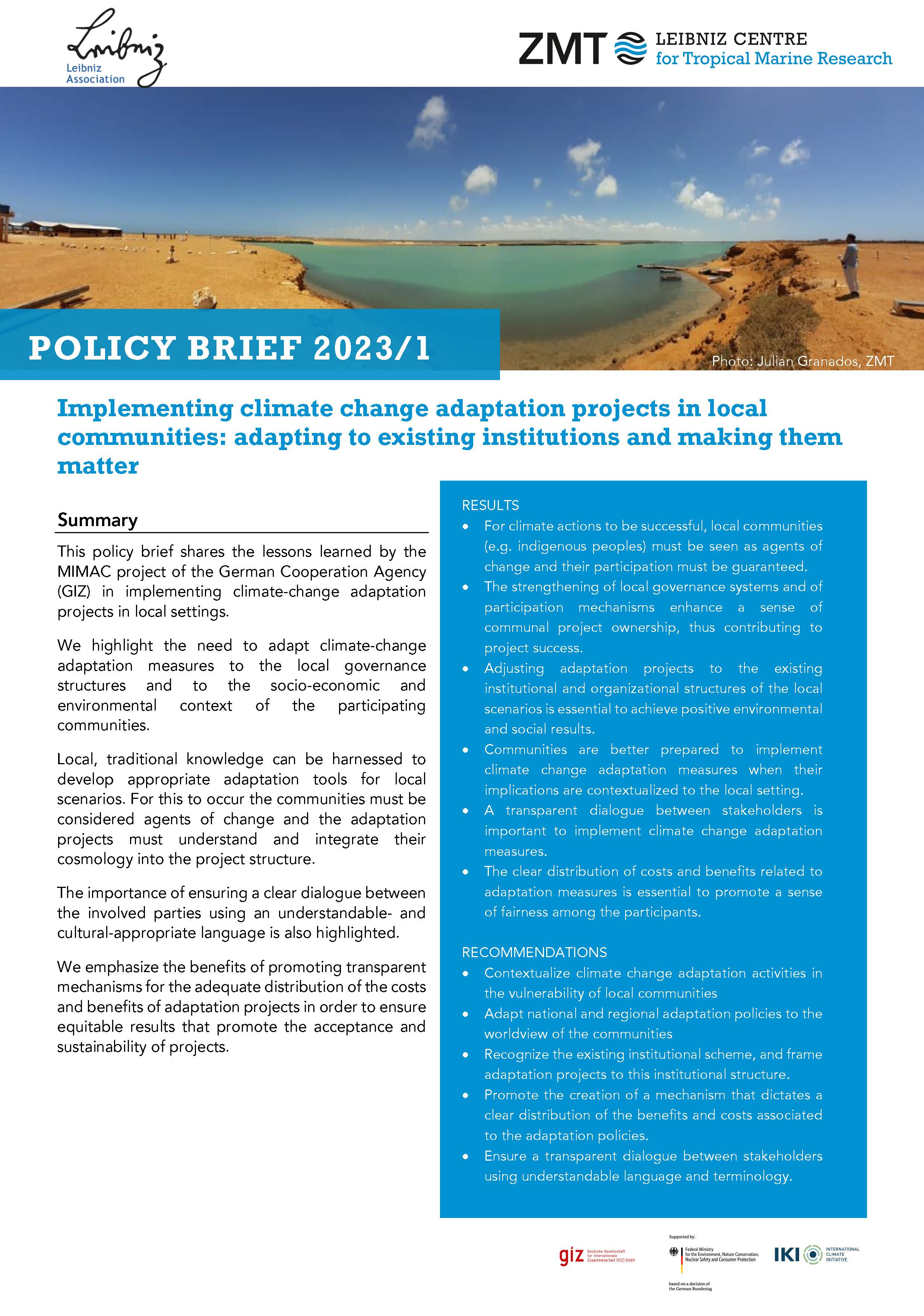
 Seiten aus ZMT Policy Brief Sechura English v2


Policy Brief "Humboldt Tipping: From Mental Systems To Leverage Points In The Sechura Marine Resource System"

Authors:

Achim Schlüter (a), Ben Nagel (a), Carlos Nuñez Beingolea (b)

(a) The authors work at, or are affiliated with the Leibniz Centre for Tropical Marine Research (ZMT), Bremen, Germany,

(b) Pontifical Catholic University of Peru (PUCP), Lima, Peru

DOI: https://doi.org/10.21244/zmt.2026.002

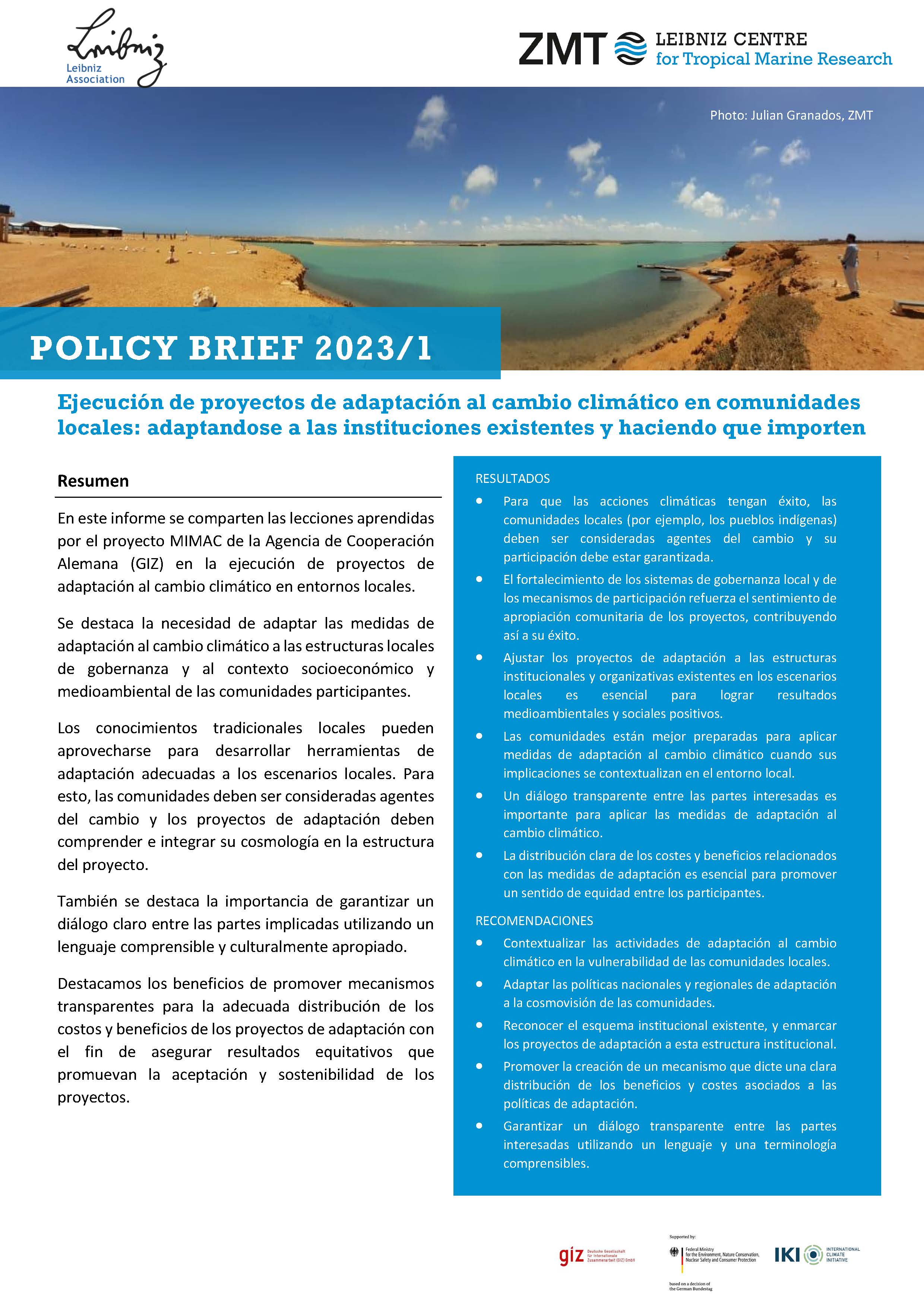
Seiten aus ZMT Policy Brief Sechura English v2

Recommendaciones Políticas "De Los Modelos Mentales A Seis Puntos De Intervención En El Sistems De Recuros Marinos De Sechura"

Autores:

Achim Schlüter (a), Ben Nagel (a), Carlos Nuñez Beingolea (b)

(a) Los autores trabajan en el Centro Leibniz de Investigación Marina Tropical (ZMT) de Bremen, Alemania, o están vinculados a dicho centro,

(b) Pontifical Catholic University of Peru (PUCP), Lima, Peru

DOI: https://doi.org/10.21244/zmt.2026.003

Blue Tourism Initiative

https://bluetourisminitiative.org/main-publications/sustainable-blue-tourism-in-the-western-indian-ocean-trends-challenges-and-policy-pathways/

Authors: Judy Kepher Gona (Sustainable Travel and Tourism Africa), Paul Baraka, (CORDIO East Africa), Angelo Sciacca, (IDDRI), Giulia Balestracci (Eco-Union), Joshua Rambahiniarison (CORDIO East Africa), Lucy Atieno (Sustainable Travel and Tourism Africa, Leibniz Centre for Tropical Marine Research - ZMT)
Coordinator: Angelo Sciacca (IDDRI), Giulia Balestracci (Eco-Union)
Contributors & Reviewers: Jeremie Fosse (Eco-union), Julien Rochette (IDDRI), Samson Obiene, (CORDIO East Africa)

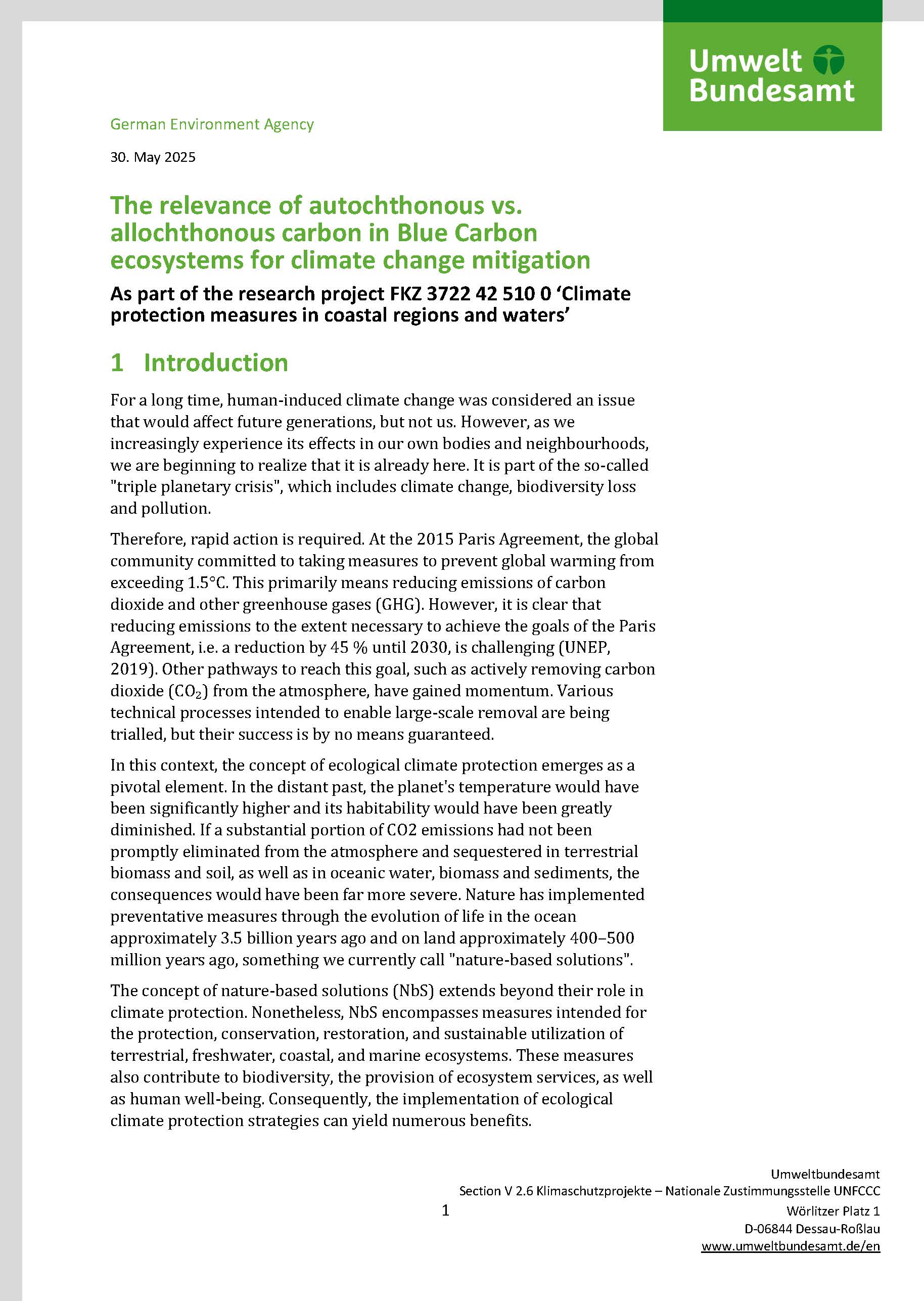
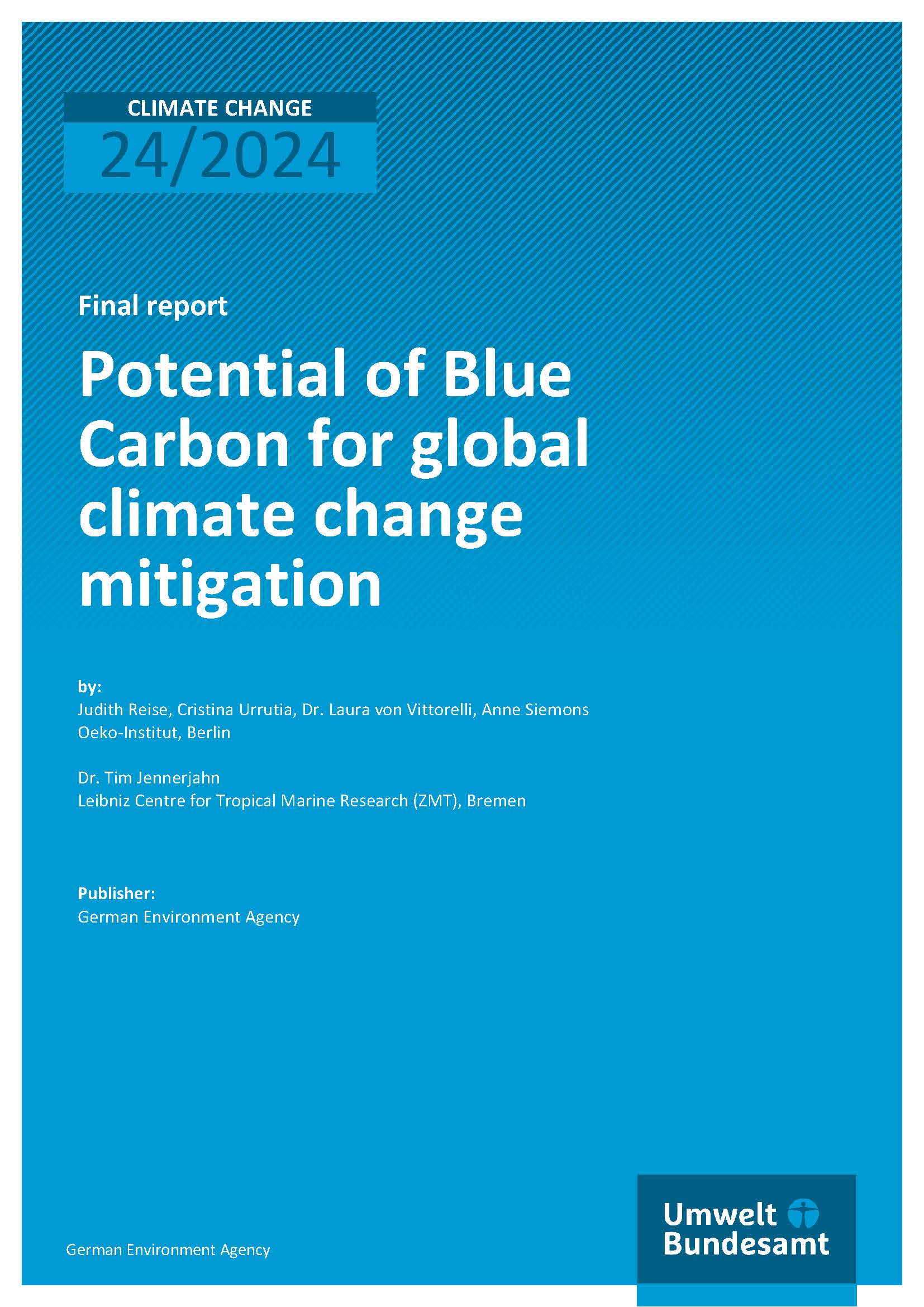
Cover Potential of Blue Carbon for Global Climate Change Mitigation

Reise, Judith, Urrutia, Cristina, von Vittorelli, Laura, Siemons, Anne and Jennerjahn, Tim (2024) Potential of Blue Carbon for global climate change mitigation. , ed. by Umwelbundesamt, UBA, Voß, Katja and Erxleben, Friederike. Emissionsbilanz erneuerbarer Energieträger, 24 . Umweltbundesamt, Berlin, 39 pp.

Download: https://www.umweltbundesamt.de/en/publikationen/potential-of-blue-carbon-for-global-climate-change

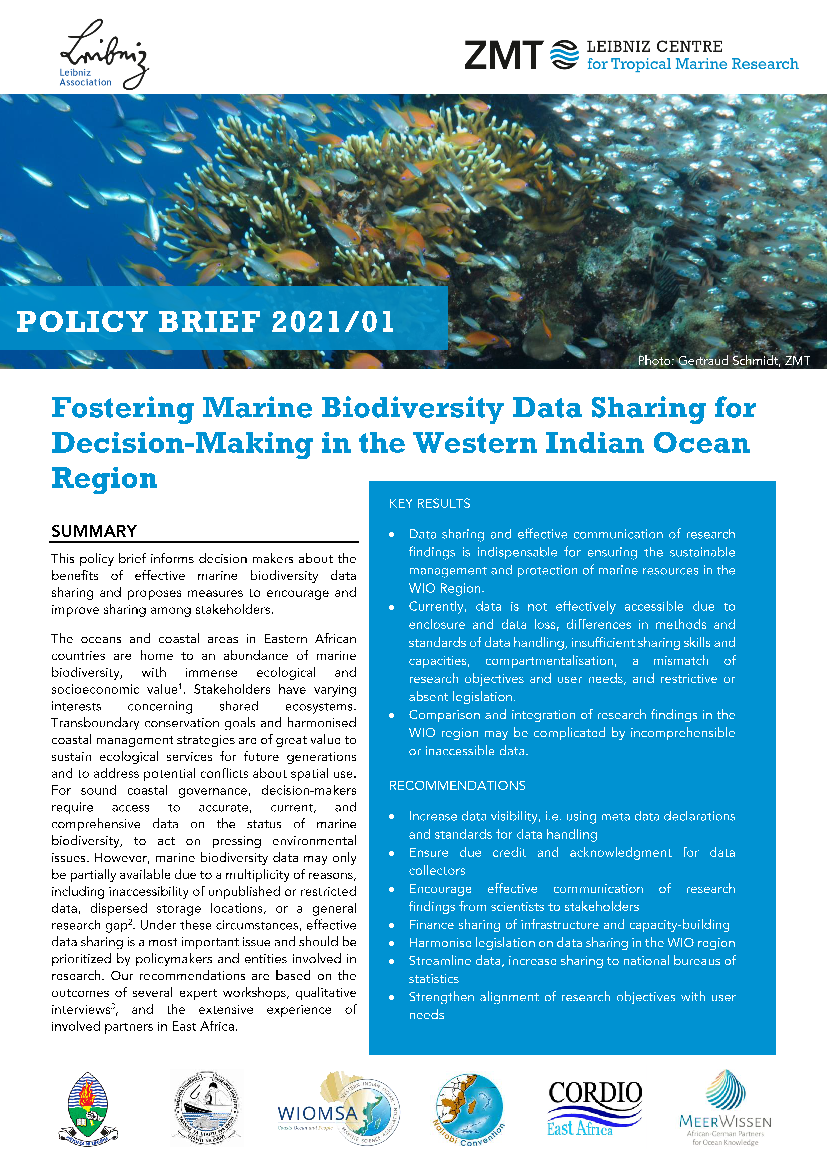
Cover 2021 01 Improving Biodversity Data Sharing in the WIO Policy Brief English

Sophia Kochalski

Lotta Clara Kluger

and Annette Breckwoldt

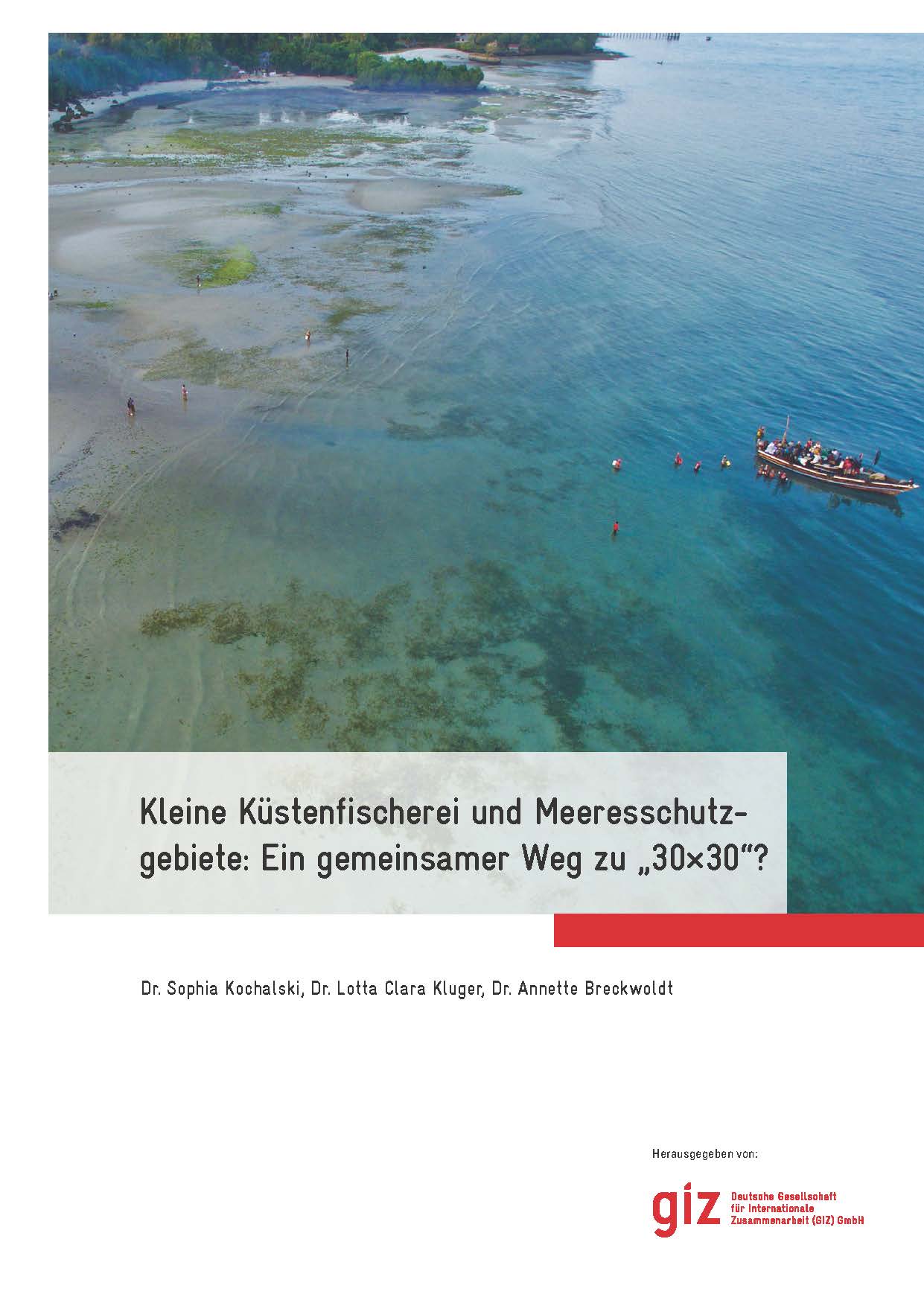
Kochalski, Sophia, Kluger, Lotta Clara and Breckwoldt, Annette (2024) Kleine Küstenfischerei und Meeresschutzgebiete: Ein gemeinsamer Weg zu „30×30“?. , ed. by Deutsche Gesellschaft für Internationale Zusammenarbeit GmbH, GIZ. , Bonn, 28 pp.

Download: https://www.giz.de/de/downloads/giz2024-de-studie-30x30.pdf


Cover 2021 01 Improving Biodversity Data Sharing in the WIO Policy Brief English

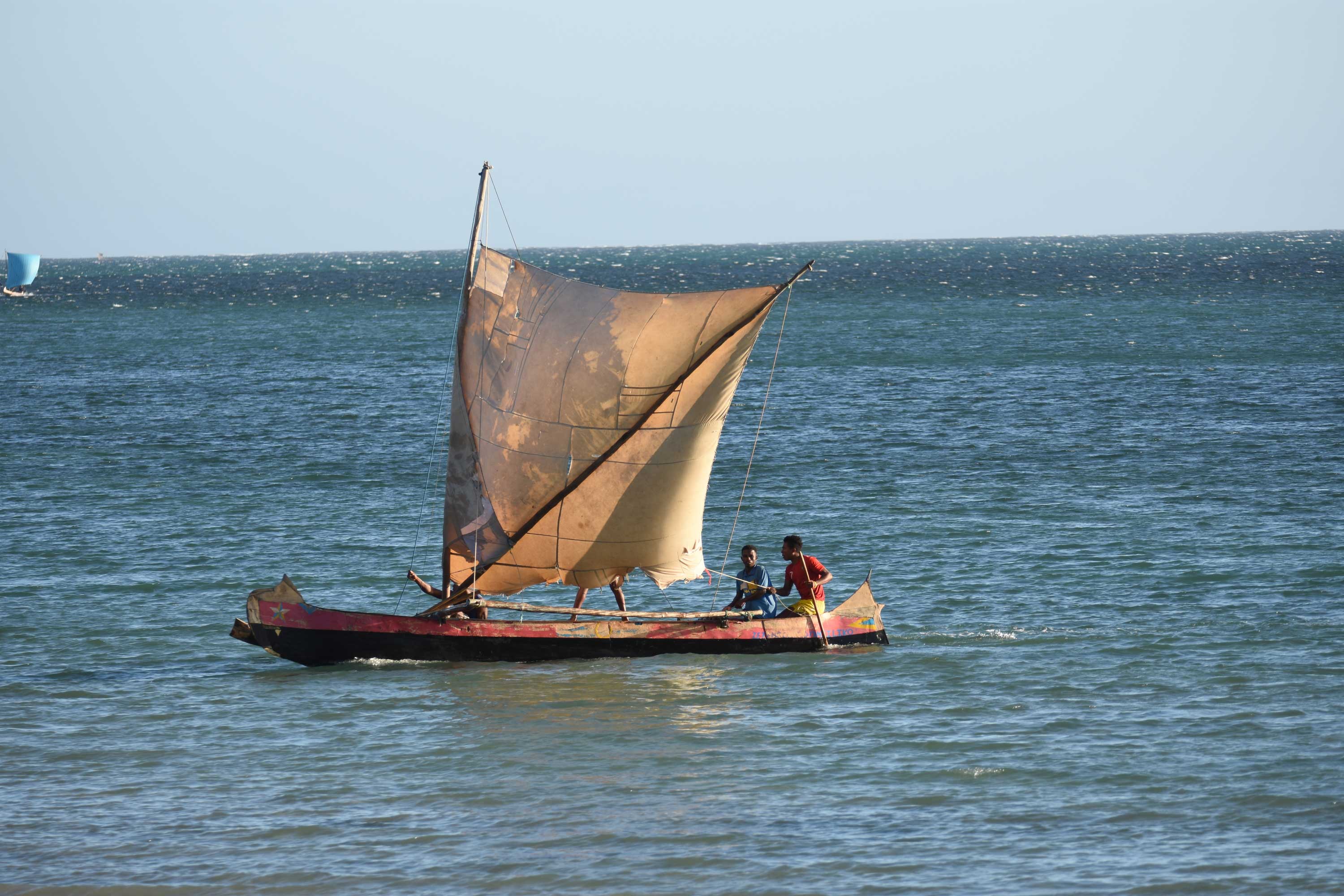
Photo: H. Reuter, ZMT

A Western Indian Ocean Information Management Strategy (IMS) (2024)

Editors:
Hauke Kegler (ZMT), Alexandra Nozik (ZMT)

Authors - The Information Management Strategy is a collective effort, with special acknowledgment to the Multi-Stakeholder Working Group, who not only contributed extensively to its drafting but are also esteemed co-authors of this document. A full list of editors, authors and contributors can be be found here.

Name

Expertise & Designation

Country

Kamal Thabiti Soudjay, Ph.D

Researcher

Comoros

Dr. Nadjim Ahmed Mohamed

Laboratoire des Sciences marines et Littorales Faculté des Sciences et Techniques Université des Comores

Comoros

Mrs. Susan Auma Otieno

Fishery Expert & Assistant Director Fisheries, Ministry of Agriculture, Livestock, Fisheries and Irrigation State Department for Fisheries, Aquaculture and the Blue Economy

Kenya

Dr Arshad Rawat

Director - Oceanography / Marine Geosciences Unit Prime Minister’s Office Department for Continental Shelf and Maritime Zones
Administration and Exploration

Mauritius

Dr. Abdikarim Hersi

Climate change, environmental governance, Food security and livelihood and fisheries sector development

Somalia

Dr Abdulqadir Omar Ziyad

Marine Science Department

Somalia

Mr. Masumbuko Semba

Oceanographer and Data Scientist

The Nelson Mandela African Institution of Science and Technology (NM-AIST)

Tanzania

Nassor Abdalla Nassor

Head of ICT and Fisheries Statistics, Ministry of Blue Economy and Fisheries, Department of Fisheries Development and Marine Resources-Zanzibar

Zanzibar

Lauren Williams

Scientist (Geospatial): Oceans Research Department of Forestry, Fisheries and the Environment

South Africa

Julien Barde, PhD

IT Research Engineer at IRD and Expert in Data and Fisheries Science

France

Mr Ranaivosoa Rija Mamitiana Olivier

Head of Unit of the Spatial Reference Information System, National Office for the Environment (ONE) of the Ministry of the Environment and Sustainable Development

Madagascar

Mr. Justin Prosper

Ag. Director General of the Climate Change Division

Seychelles

Ms Sofia Chambe

Geomatic Studies

Mozambique

Dr Shannon Hampton

Ocean Governance, Fisheries, Pollution, Invasive Species

South Africa

James Mbugua

CORDIO EAST AFRICA/ GIS and data management

Kenya

Siajali Pamba

University of Dar es Salaam/ Dr. Physical Oceanography

Tanzania

Naly Rakotoarivony

Blue Ventures/ Head of policy and partnership / Marine conservation

Madagascar

Mathias Igulu

USAID

Tanzania

Harrison Ong'anda

Kenya Marine and Fisheries Research Institute/ Marine ecology, data management, GIS & Remote Sensing

Kenya

Peter Manyara

IUCN / International Union for Conservation of Nature/ Regional Program Manager of Coastal and Ocean Resilience

Kenya

Mr Edson Anselmo Jose

RARE/ Senior manager for data and monitoring

Mozambique

Ednah Onkundi

Kenya Marine and Fisheries Research Institute/ Marine ecology, data management, GIS & Remote Sensing

Kenya

Edmond Kuto

Wetlands International/ Geographic Information System

Kenya

Emmanuel M. Mpina

TNC / The Nature Conservancy (US International organization) / Marine Spatial Planning

Tanzania

Doreen Simiyu

SWIOTUNA / Tuna Fisheries

Kenya

Maafaka Ravelona

WWF Madagascar / Technical Officer

Madagascar

Tanguy Nicolas

FFI/ Programme Manager

Seychelles

John Ngatia

IOC-UNESCO/ Programme Assistant

Kenya


Editors

Name

Expertise & Designation

Country

Sean Fennessy

Oceanographic Research Institute

South Africa

Joëlle Rahantarivelo

Blue Venture

Madagascar


Nairobi Convention- Technical and Funding Support through SAPPHIRE and EU- MEAs projects

Name

Expertise & Designation

Country

Theuri Mwangi

National Project Officer

Kenya

Agnes Mukami Muriuki

Programme Assistant

Kenya

Melisa Wandia Mureithi

Communication Assistant

Kenya

Abel Kiprono

Programme Assistant

Kenya


Deutsche Gesellschaft für Internationale Zusammenarbeit GmbH (GIZ) – Technical and Funding Support through the Western Indian Ocean Governance Initiative Project

Robin Farrington- Programme Manager Yvonne Waweru-Senior Advisor

Carol Mutiso- Program Officer

Collective Leadership Institute gGmbH - Strategy development process facilitation

Douglas F. Williamson Mai ElAshmawy

Centre for Tropical Marine Research (ZMT) - Technical Advice & Strategy Development

Hauke Reuter Rebecca Lahl Hauke Kegler Alexandra Nozik


Frias, J., Müller, C., & Capuano, T. (2024). Plastic pollution and the plastisphere: findings and recommendations. Policy Brief - MicroplastiX.
DOI: https://doi.org/10.5281/zenodo.10560911


Summary


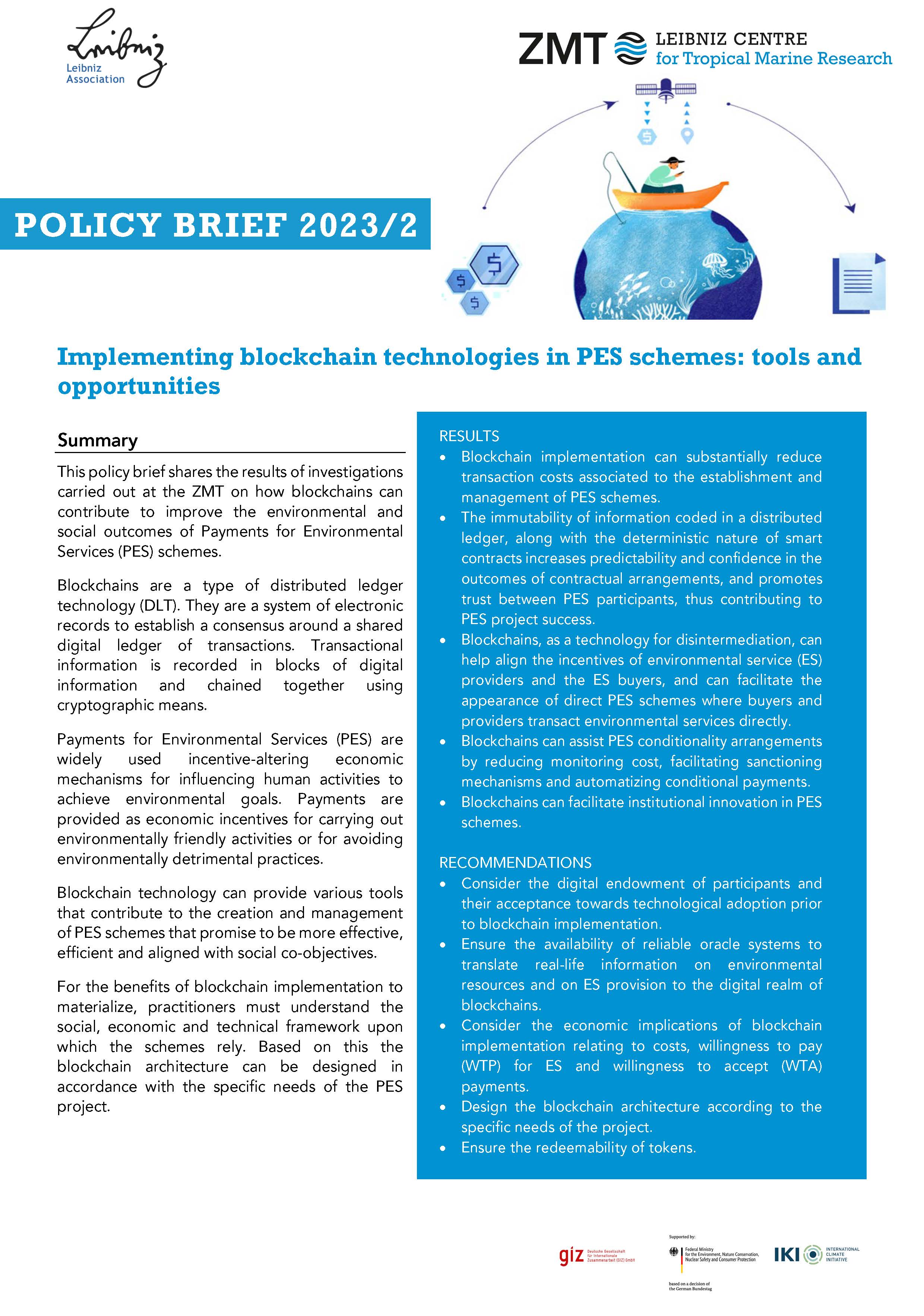
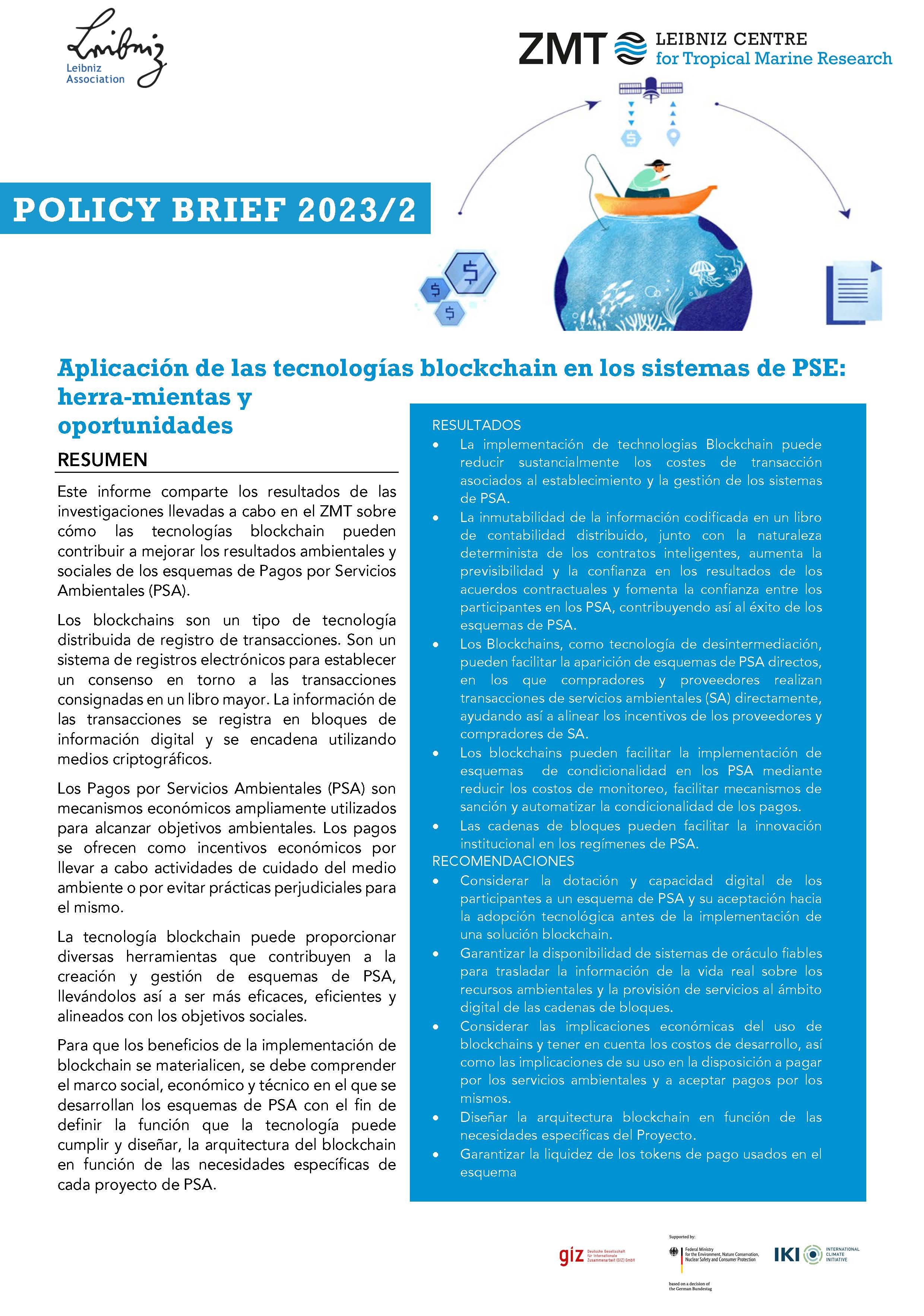
This study investigates how blockchains can contribute to improve the environmental and social outcomes of Payments for Environmental Services (PES) schemes. Blockchains are a system of electronic records to establish a consensus around a shared digital ledger of transactions.
Transactional information is recorded in blocks and chained together using cryptographic means. Blockchains were first proposed in 2008 as a technology to coordinate decentralized economic transactions through the internet.

Payments for Environmental Services (PES) are widely used incentive-altering mechanisms for influencing human activities to achieve environmental goals. They influence the payment matrix on environment-related activities by offsetting incurred costs and generating additional economic incentives for environmentally friendly activities. The received environmental payments give serviceproviders
the opportunity to diversify their income while reducing their dependency on extractive or environmentally harmful activities.

PES are a particularly relevant tool to ensure the provision of public-good environmental services, which otherwise would not be provided. Despite increasing global demand and willingness-to-pay for environmental services, might it be by individuals or states, global PES schemes are very slow to emerge. Bulky transaction costs and insufficient institutional alternatives for conducting environmental transactions
are a reason for this imbalance. Difficulties and expenses in finding a conservation counterpart, establishing contract conditions, monitoring outcomes and transferring funds hinder the establishment
of such exchanges. Blockchains can help counter these difficulties.

Blockchains offer a decentralized and fraud resistant way of organising and monitoring transactions. Distributed ledgers, smart contracts (automated & only to be changed based on consensus), crypto wallets, and programmable money (which can only be spent or earned under predefined circumstances) are blockchain-supported applications that can help significantly reduce transaction costs and increase trust for all parties involved.

You can download the full study here: Blockchain and Payments for Environmental Services: Tools and Opportunities for Environmental Protection

Title: Blockchain and Payments for Environmental Services:
Tools and opportunities for environmental protection
Authors:
Julian Granados - Achim Schlüter
ISBN:
978-3-00-075090-8.
Ocean Acidification in Africa Newsletter (10/2021)


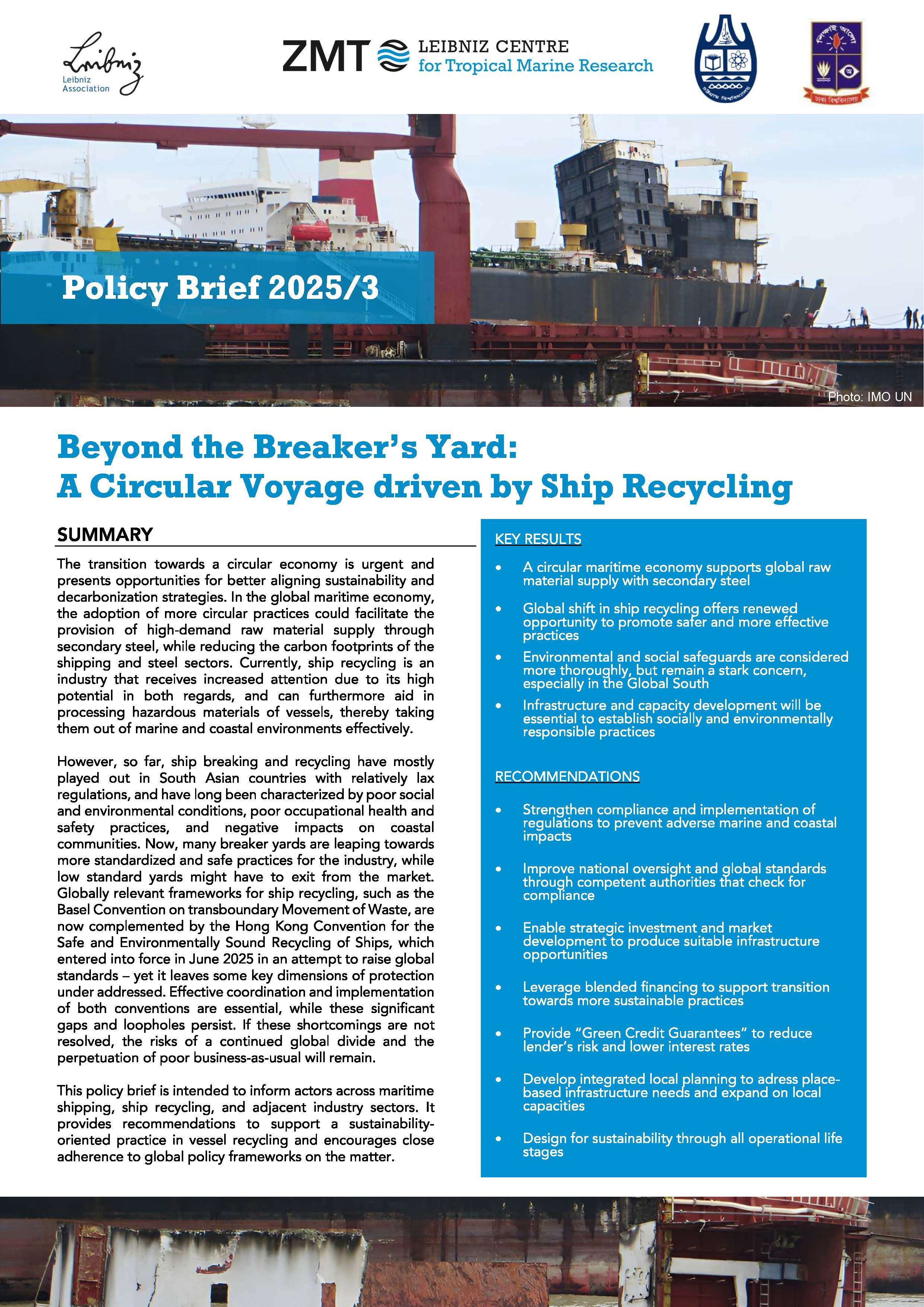
Ocean Acidification Policy Brief

Ocean Acidification in Africa Newsletter

Roshan T Ramessur, Nayrah Shaltout, Sheck Sherif, Ashley Bantelman, Trevor Eakes, and Peter Swarzenski, Sebastian Ferse, Heath Kelsey, Patrizia Ziveri

ICRS Science to Policy Paper - 07/2021

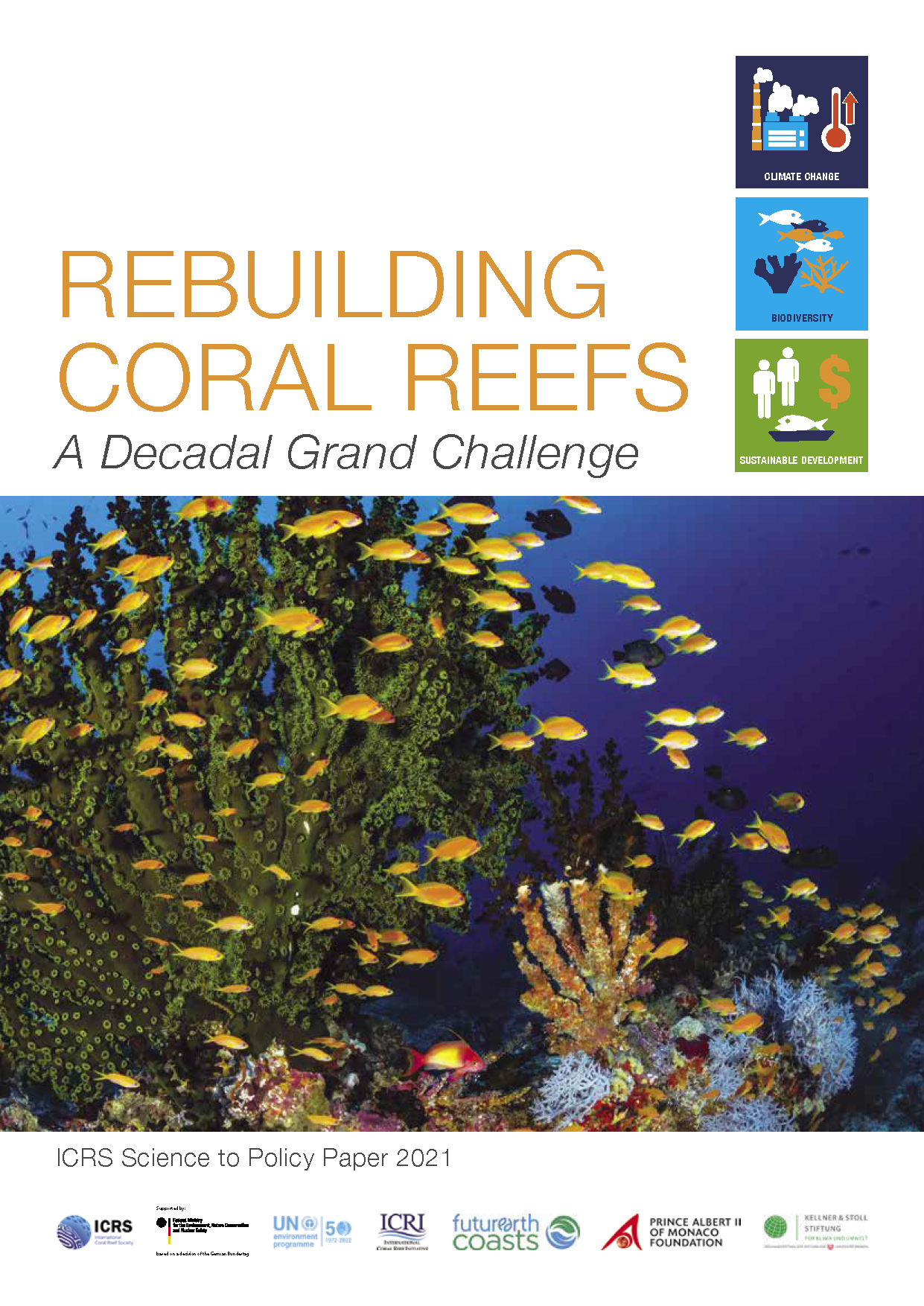
Rebuilding Coral Reefs: A Decadal Grand Challenge

Knowlton N, Grottoli AG, Kleypas J, Obura D, Corcoran E, de Goeij JM, Felis T, Harding S, Mayfield A, Miller M, Osuka K, Peixoto R, Randall CJ, Voolstra CR, Wells S, Wild C, Ferse S. Rebuilding Coral Reefs: A Decadal Grand Challenge. International Coral Reef Society and Future Earth Coasts, 56 pp. https://doi.org/10.53642/NRKY9386

Ocean Gov Policy Brief 02/2021

European COST Action CA15217

Global and Regional Management of Ocean Acidification

Galdies, C., Canu, D, Guerra, R., Martinez Romera, B., Tiller, R.

Ocean Gov Policy Brief 01/2021

European COST Action CA15217

How can FLAGs really help fishing communities?

Svels, K., Miret-Pastor, L., Pascual-Fernandez, J.

Ocean Gov Policy Brief 02/2020

European COST Action CA15217

Adapting to Climate Change Effects on Land Sea Interactions

Stojanov, R., Uscinowicz, G., Peev, P. and Kathijotes, N

Ocean Gov Policy Brief 01/2020

European COST Action CA15217


Cove OceanGov Policy Brief 1 2020

Governing Land Sea Interaction

Achim Schlüter, Kristof van Assche, Anna-Katharina Hornidge, Maria Natasa Vaidianu

Ocean Gov Policy Brief 01/2018

European COST Action CA15217

Cover OG Policy Paper 2018 01 final

Capacity development for sustainable ocean governance: Lessons learned from academia, policy and practice.

Carolin Hoffmann, Christian Neumann, Anna-Katharina Hornidge

IASS Policy Brief 3/2016


Cover IASS Policy Brief 2016 3

Capacity Development for Oceans, Coasts, and the 2030 Agenda

Shackeroff Theisen, J. M., Atkinson, S. R., Awad, A., Beaudoin, Y., Canals, P., Durussel, C., Edwards, P. E. T., Gombos, M., Hornidge, A.-K., Lameier, M., Nakamura, T., Philibotte, J., Porsché, I., Pratt, C., Robertson, L. F., Schwab, P., Unger, S., Winter, A. (2016)

 Cover Policy brief Kluger Peru ENG web

Dr. Lotta Clara Kluger      

Estimating sustainable levels of scallop bottom aquaculture in Sechura Bay (Northern Peru), DOI: 10.21244/zmt.2017/002   

Estimando Niveles Sostenibles en la Acuicultura de bivalvos en la Bahía de Sechura (Norte de Perú), DOI:10.21244/zmt.2017.005

Weitere Informationen:
Kluger LC, Wolff M, Taylor MH, Tam J (2016). Carrying capacity simulations as a tool for ecosystem-based management of a scallop aquaculture system. Ecological Modelling 331, pp. 44-55, DOI: 10.1016/j.ecolmodel.2015.09.002

Projekt: Sustainability analysis of scallop culture in Sechura Bay (Peru)

Cover Policy brief GWM Costa Rica ENG web

Dr. Gabriela Weber de Morais    

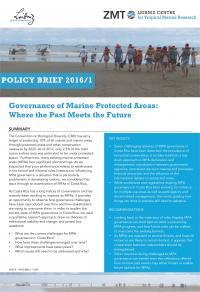
Governance of Marine Protected Areas: Where the Past Meets the Future, DOI: 10.21244/zmt.2016.001

Gobernanza de Áreas Marinas Protegidas: Donde el Pasado y el Futuro convergen, DOI: 10.21244/zmt.2016.002   

Weitere Informationen:
Weber de Morais, G., Schlüter, A., Verweij, M. (2015). Can institutional change theories contribute to the understanding of marine protected areas? Global Environmental Change 31, pp. 154-162,DOI: 10.1016/j.gloenvcha.2015.01.008

Projekt: Governance of Marine Protected Areas in Costa Rica: Stability and change of institutions