



Selected publications (out of > 300)
Bleischwitz, R., Ayilu, R. K., & Schlüter, A. (2026). Partnerships and development cooperation: supporting implementation of SDG 14 at the international level. In The Elgar Companion to Ocean Governance and the Sustainable Development Goals, pp. 186–211. Edward Elgar Publishing. DOI: 10.180392-356-7.
Matovu, B., Bleischwitz, R., Lukambagire, I., Etta, L. A., & Lutalo, B. (2025). Decomposing sand mining complexities to chart ocean sustainability narratives and pathways in the coastal zones of Africa. The Extractive Industries and Society, 23, 101646. DOI: 10.1016/j.exis.2025.101646.
Matovu, B., Bleischwitz, R., Lukambagire, I., Etta, L. A., Alkoyak-Yildiz, M., Tarek, R., Lee, M.-A., Mammel, M., Anusree, S., & Suresh, A. S. (2025). Linking the blue economy to women's empowerment to create avenues for the realization of ocean sustainability targets in the global south. Ocean & Coastal Management, 262, 107582. DOI: 10.1016/j.ocecoaman.2025.107582.
Matovu, B., Lukambagire, I., Bleischwitz, R., Etta, L. A., Alkoyak-Yildiz, M., Suresh, A. S., & Anusree, S. (2025). An evidence-based review of the pre-requisite interventions for women's inclusion in the blue economy in the global south: A case study of India. Marine Policy, 171, 106476. DOI: 10.1016/j.marpol.2024.106476.
Lahl, R., Bleischwitz, R., Lahl, U., & Zeschmar-Lahl, B. (2025). Third-generation biodegradable plastics – A complementary strategy to tackle the marine litter problem. Sustainable Chemistry and Pharmacy, 44, 101925. DOI: 10.1016/j.scp.2025.101925.
Hale, T. N., Ali, S. H., Christman, P., Bleischwitz, R., et al. (2025). Critical minerals policies need clearer interface with scientifically credible targets. Global Sustainability, 8. DOI: 10.1017/sus.2025.10014.
Zhao, G., Li, W., Geng, Y., & Bleischwitz, R. (2024). Measuring trade efficiency of antimony products in China. Journal of Cleaner Production, 486, 144440. DOI: 10.1016/j.jclepro.2024.144440.
Bleischwitz, R., Höller, J., & Kriegl, M. (2023). Ship recycling—estimating future stocks and readiness for green steel transformation. Environmental Research Letters, 18(12), 124034. DOI: 10.1088/1748-9326/ad0a55.
Geng, Y., Sarkis, J., & Bleischwitz, R. (2023). How to build a circular economy for rare-earth elements. Nature, 619(7969), 248–251. DOI: 10.1038/d41586-023-02153-z.
Matovu, B., Brouwer, F., Bleischwitz, R., Aljanabi, F., & Alkoyak-Yildiz, M. (2023). Resource nexus perspectives in the Blue Economy of India: The case of sand mining in Kerala. Environmental Science & Policy, 151, 103617. DOI: 10.1016/j.envsci.2023.103617.
Aggestam, F., Miedzinski, M., & Bleischwitz, R. (2023). The mirage of integration: Taking a street-level perspective on the nexus approach. Environmental Innovation and Societal Transitions, 46, 100700. DOI: 10.1016/j.eist.2023.100700.
Bleischwitz, R., Yang, M., Huang, B., Xu, X., Zhou, J., McDowall, W., Andrews-Speed, P., Liu, Z., & Geng, Y. (2022). The circular economy in China: Achievements, challenges and potential implications for decarbonisation. Resources, Conservation and Recycling, 183, 106350. DOI: 10.1016/j.resconrec.2022.106350.
Domenech, T., Bleischwitz, R., & Calzadilla, A. (2022). Decarbonizing steel making in China through circular economy approaches. One Earth, 5(8), 856–858. DOI: 10.1016/j.oneear.2022.07.012.
Bleischwitz, R., Kirschke, S., & Adam, N. (2021). Implications of the Resource Nexus on International Relations: The Case of the Grand Ethiopian Renaissance Dam. Zeitschrift für Außen- und Sicherheitspolitik. DOI: 10.1007/s12399-021-00878-1.
Wakdok, S. S., & Bleischwitz, R. (2021). Climate change, Security, and the Resource Nexus: Case study of Northern Nigeria and Lake Chad. Sustainability, 13(19), 10734. DOI: 10.3390/su131910734.
Bleischwitz, R., Spataru, C., VanDeveer, S. D., Obersteiner, M., van der Voet, E., Johnson, C., Andrews-Speed, P, Boersma, T, Hoff, H, van Vuuren, D. P. (2018). Resource Nexus Perspectives towards the UN Sustainable Development Goals. Nature Sustainability Perspective. Doi:10.1038/s41893-018-0173-2.
GENG, Y., Sarkis, J., & Bleischwitz, R. (2019). How to globalize the circular economy. Nature, 565, 153-155. Doi:10.1038/d41586-019-00017-y.
Bleischwitz, R., Nechifor, V., Winning, M., Huang, B., Geng, Y.: Extrapolation or saturation – an exploration into growth patterns, development stages and decoupling, Global Environmental Change 48 (2018) 86 – 96. https://doi.org/10.1016/j.gloenvcha.2017.11.008
Bleischwitz, R., Hoff, H., Spataru, C., vd Voet, E., VanDeveer, S. (Eds.) (2018): Routledge Handbook of the Resource Nexus.
Domenech, T. / Bleischwitz R. et al (2019) Mapping Industrial Symbiosis Development in Europe_ typologies of networks, characteristics, performance and contribution to the Circular Economy. Resources, Conservation and Recycling 141, 76-98.
Carvalho, P., Spataru, C., & Bleischwitz, R. (2018). Integration of water and energy planning to promote sustainability. Journal of Sustainable Development of Energy, Water and Environment Systems.
Huang, B, (…) Bleischwitz, R. (2018) Construction and demolition waste management in China through the 3R principle. Resources, Conservation and Recycling 129: 36 - 44.
Wirtschaftspolitik, Metropolis (=Habilitation)
Selected Projects
Leibniz Lab SYSTAIN – Systemic Sustainability
2024–2027
Research on systemic sustainability transformations, focusing on biodiversity, climate protection, sustainable food systems and the sustainable use of marine resources. Raimund Bleischwitz contributes to the project through the ZMT’s involvement in a dedicated work package.
CoARA – Coalition for Advancing Research Assessment
2024–2026
Co-chair of the Societal Impacts subgroup within CoARA’s Towards Transformations Working Group. Together with Estradivari and international partners, Raimund Bleischwitz contributes to developing approaches that recognise societal impact as a core dimension of research assessment.
Ship Recycling and the Circular Economy
Research on the potential for environmentally sound ship recycling in Germany, with a focus on circular economy approaches, secondary steel production and the contribution of maritime recycling to sustainable resource use. Related work includes a ZMT-led potential analysis for ship recycling in Bremen, conducted in collaboration with Michael Kriegl and Jannik Höller. Sarah Zwicker and Lara Stuthmann are also associated with the broader research context.
PhD Supervision
Ge Yin – University College London (UCL)
Doctoral supervision.
Via Widiayadi
Doctoral supervision.
Further information
ResearchGate: https://www.researchgate.net/profile/Raimund-Bleischwitz
ORCID: https://orcid.org/my-orcid?orcid=0000-0001-8164-733X
Google Scholar: https://scholar.google.de/citations?user=FKuR2UsAAAAJ&hl=de
Website: https://iris.ucl.ac.uk/iris/browse/profile?upi=RBLEI92
Wikipedia: https://en.wikipedia.org/wiki/Raimund_Bleischwitz
Social Media
Twitter: @BleischwitzR
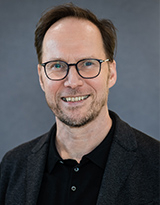
Besides academic merits Raimund considers himself a builder of research institutions. Prior to ZMT he was Director of The Bartlett School of Environment, Energy and Resources at University College London, a department with an annual turnover of £25M, 200 staff and 150 PhD students. Before he established the Institute for Sustainable Resources at UCL as Deputy Director. Raimund spent time abroad at the Transatlantic Academy in Washington DC, in China, and Japan, and he worked for many years at the College of Europe in Bruges, Belgium, and at the Wuppertal Institute, DE. Raimund's leadership style is based on values of inclusion, transparency, diversity, and enabling of staff. He is actively reaching out to stakeholders and the public as ambassador for ZMT and mission-oriented sustainability transformations.