



Global Change Impacts and Adaptation
Short title: Global Change
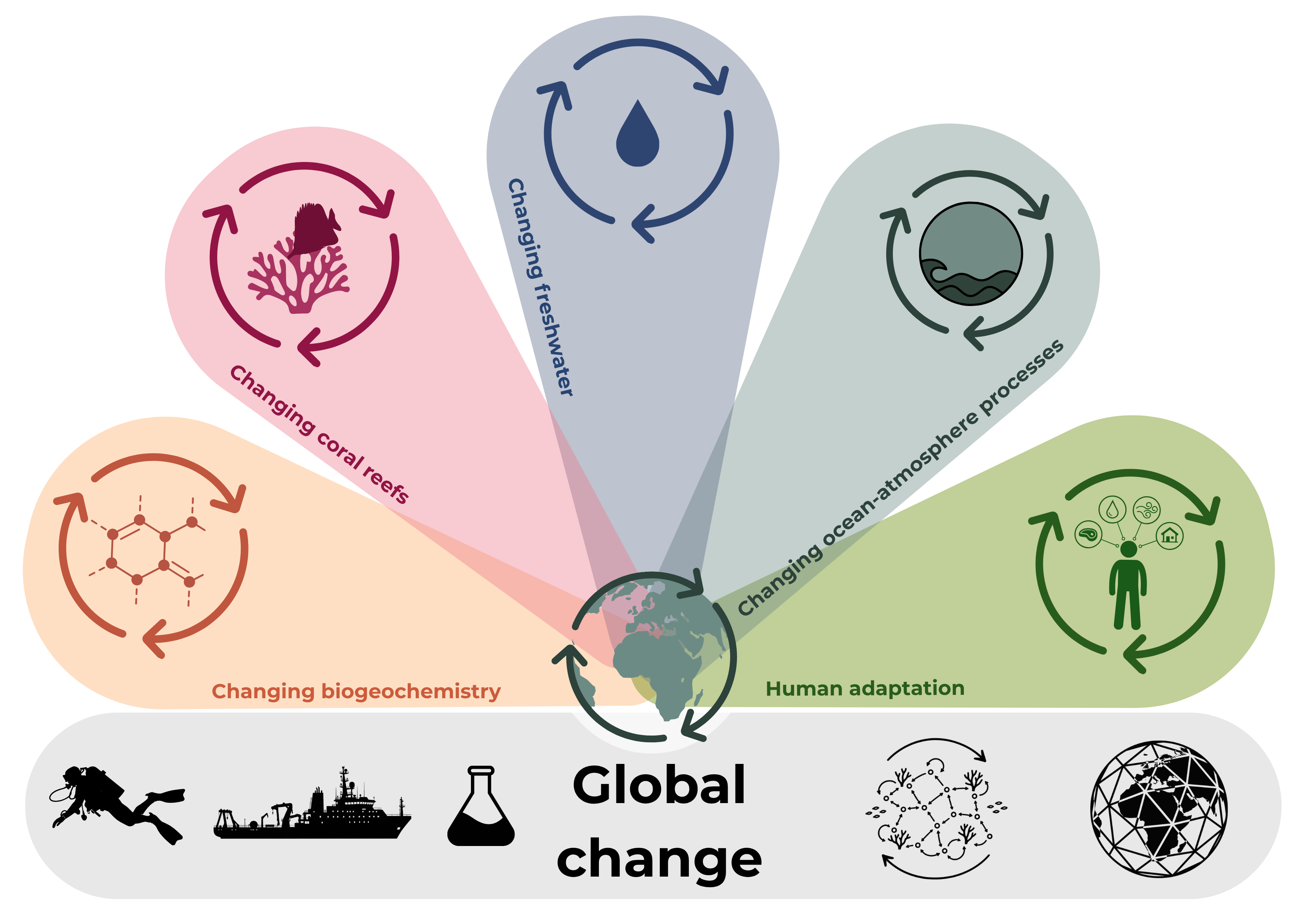
Research topics (coloured petals) and methodological competences (grey base) of the programme area. We rely on underwater data collection together with tropical partners, sea-going expeditions, laboratory work, mathematical models, and Earth-System modelling.
WHAT WE DO
Within this programme, we address the compound challenges of climate change, biodiversity loss, food and water insecurity, and growing geopolitical polarisation. To this aim, we pursue a robust understanding of tropical Earth system dynamics and human responses to global crises. We investigate fundamental mechanisms linking climate and ocean change and their coupling with element and water cycling and the integrity of social-ecological systems. To achieve this goal, we combine fieldwork, laboratory, and the analysis of large datasets (e.g., remote sensing and reanalysis products) with state-of-the-art question-driven modelling approaches. We investigate the oceans’ influence in tropical cyclones under climate change, global groundwater patterns, the dynamics of dead zones (i.e., oxygen minimum zones, OMZs), the marine nitrogen and carbon cycles, coastal upwelling systems, coral reef change, and human perception of climate change. By working closely with external partners and all other programme areas at ZMT, we integrate scientific knowledge and numerical and conceptual models into a unified Earth system approach. This is essential to upscale local processes, downscale global change dynamics, and to link fundamental knowledge to applied solutions.
HOW WE FUNCTION
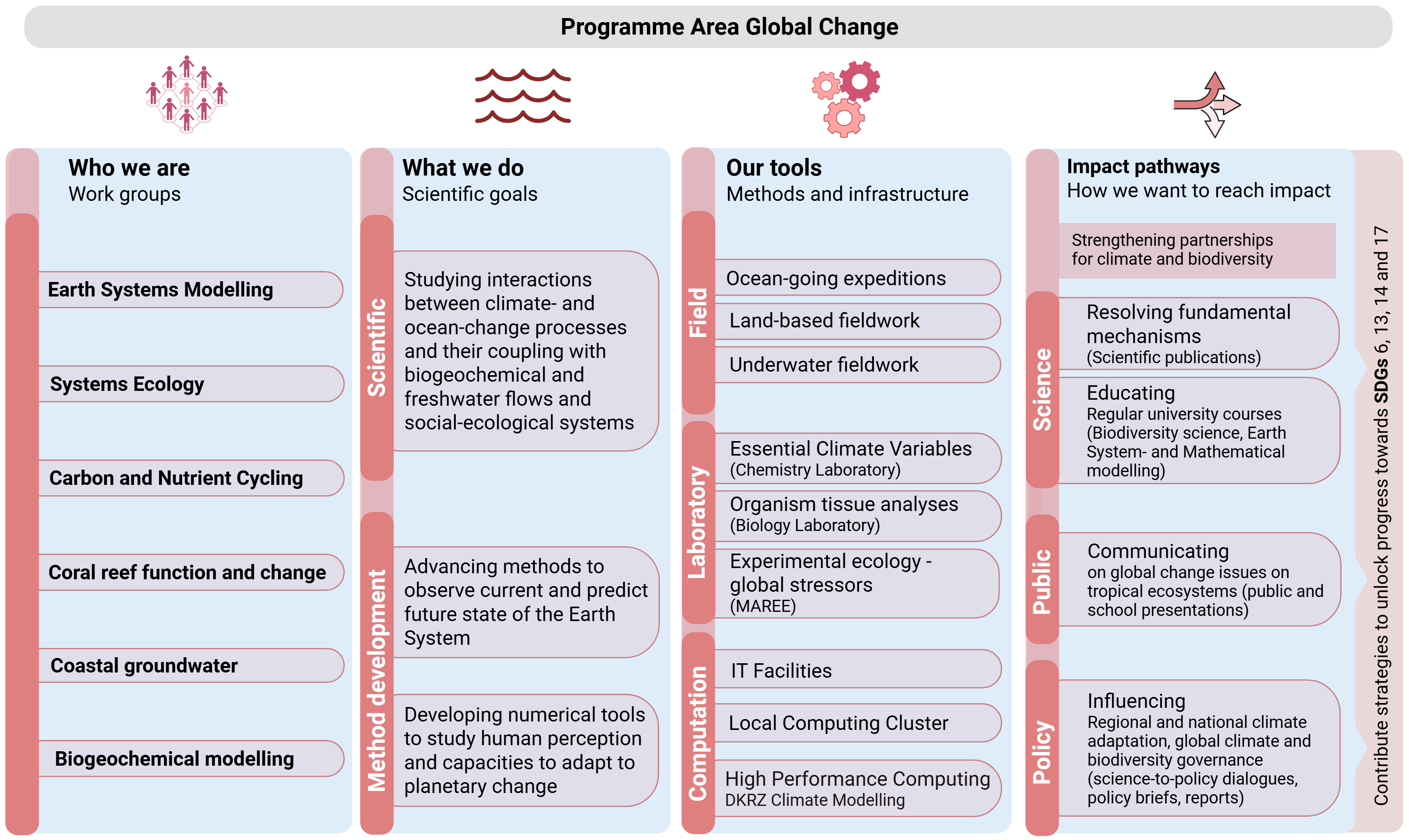
This programme is conformed by six complementary research groups (Who we are). Together, we share scientific and method development goals (What we do). To fulfil these goals we rely on a variety of field, laboratory, and computation methods and infrastructures (Our tools). We aim to impact scientific, public, and policy spheres, to ultimately contribute strategies that can unlock progress towards sustainable development goals SDGs 6, 13, 14 and 17.
COLLABORATIVE PROJECTS
2025-2030 COLDEMAR
2025-2028 TropEcS
CORE FINDINGS
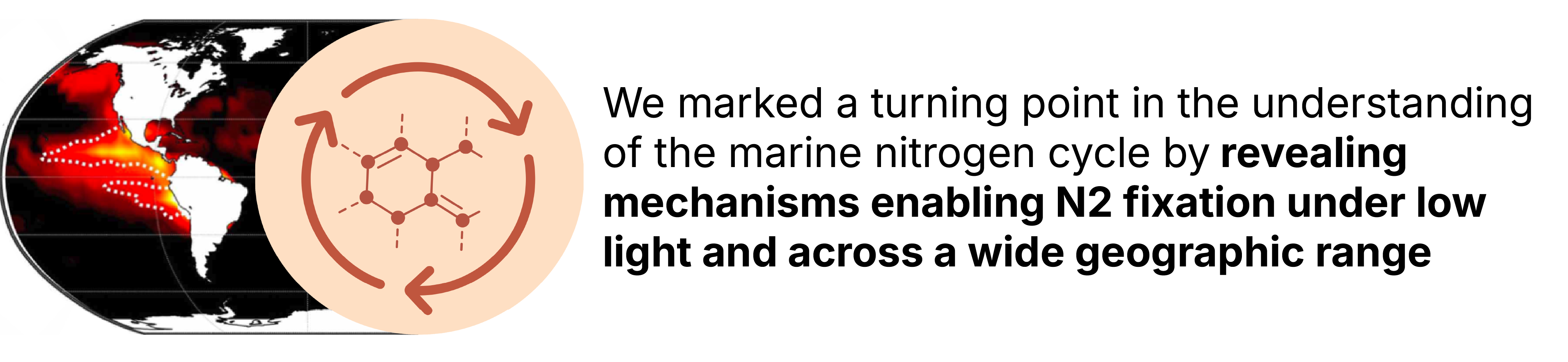
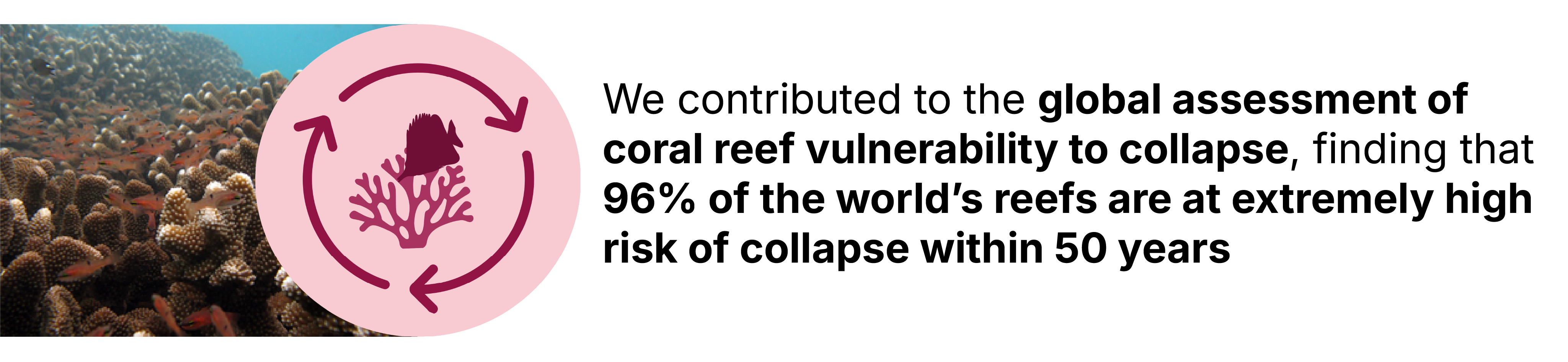

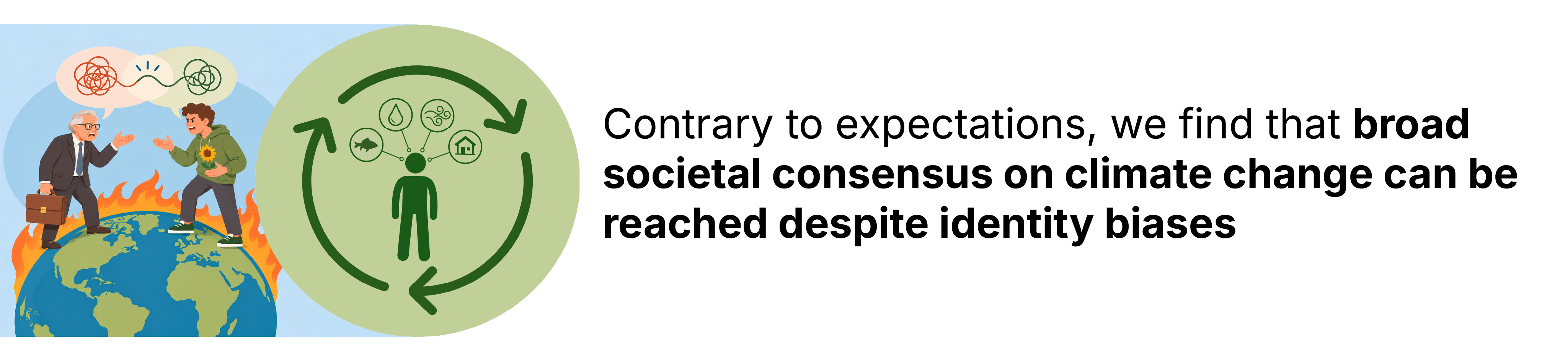
 Kontakte
 Publikationen Programmbereich 2
 Arbeitsgruppen
 Ehemalige Arbeitsgruppen
 Wissenschaftliche Projekte
 Wissenschaftliche Projekte (abgeschlossen, Auswahl)
 On Expedition
 Veranstaltungen