



Tropische Küstenregionen stellen sozial-ökologische Systeme an der Schnittstelle von Land, Ozean und Atmosphäre dar. Sie beherbergen eine außergewöhnliche Biodiversität, regulieren das globale Klima durch Austausch von Kohlenstoff und Wärme, und sichern Millionen von Menschen ihren Lebensunterhalt durch Fischerei, Tourismus und Küstenlandwirtschaft. Dennoch sind diese Regionen in aktuellen Erdsystemmodellen unzureichend berücksichtig, was unser Verständnis darüber eingeschränkt, wie sich globale Veränderungen auf tropische Küstenökosysteme und Gesellschaften auswirken und wie diese Regionen wiederum das Erdsystem beeinflussen.
TropEcS (Modelling Socio-Economic Dimensions across Tropical Coastal Ecosystems and the Earth System) ist ein neuer Forschungsschwerpunkt zur Stärkung der integrierten Modellierungskompetenzen des ZMT. Er vereint Expertise in der Erdsystemmodellierung – einschließlich physikalischer Ozeandynamik, Biogeochemie, Ökosystemreaktionen und Mensch-Umwelt-Interaktionen – mit langjährigen Stärken des ZMT in der tropischen Küstenforschung. Diese Integration verbindet detailliertes Prozessverständnis und lokales Wissen mit globaler und regionaler Modellierung und ermöglicht so eine umfassendere Darstellung tropischer Küstenräume in Erdsystemmodellen.
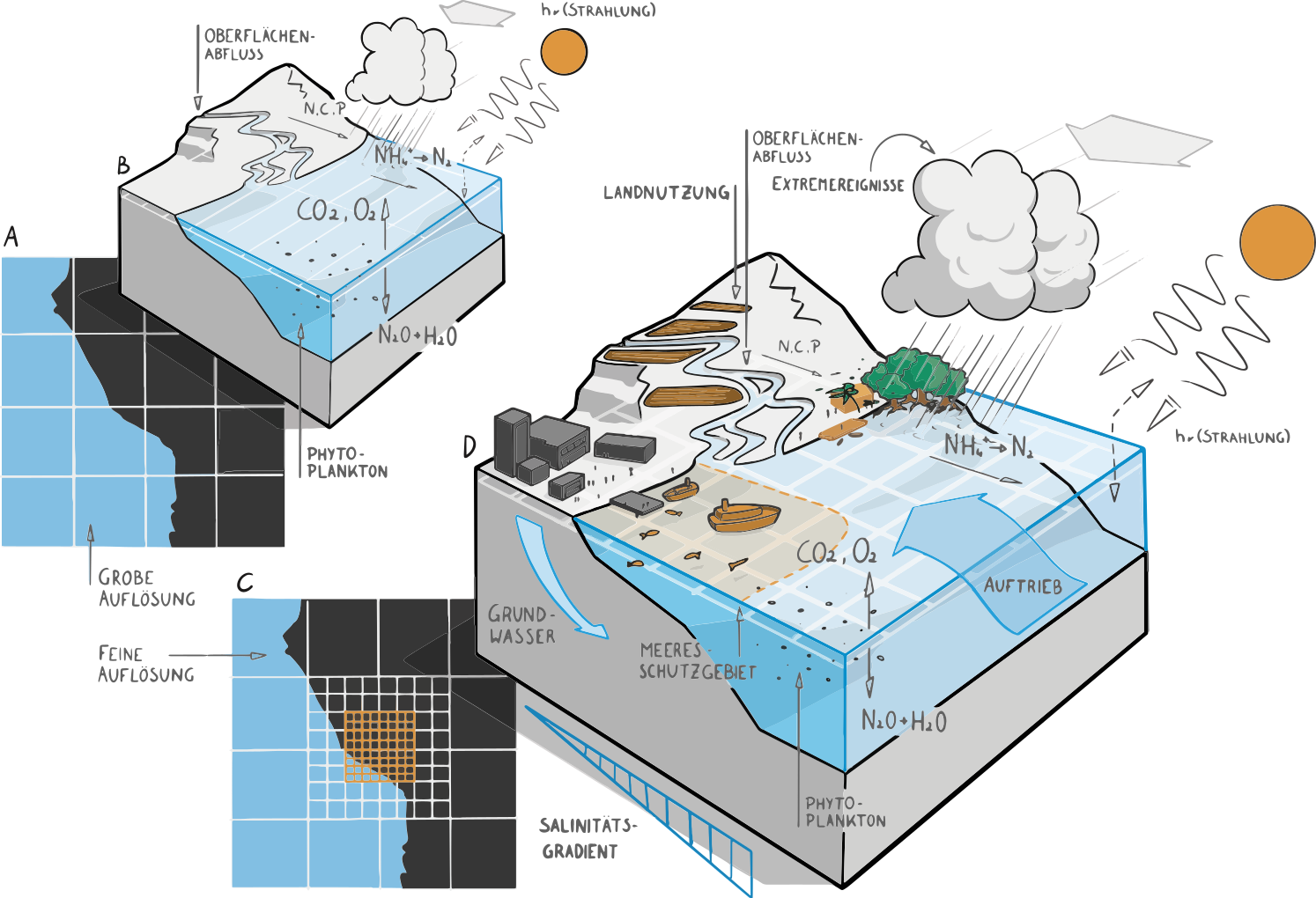
Abbildung 1: TropEcS-Vision zur Darstellung von Küstenprozessen in Erdsystemmodellen (ESMs). A zeigt einen Küstenquerschnitt in einem typischen ESM mit grober horizontaler Auflösung, während B die in ESMs üblicherweise dargestellten Prozesse darstellt. C verdeutlicht die notwendige konzeptionelle Herunterskalierung für die Abbildung des Küstenraums, und D illustriert die Ökosystemmodell-Komponenten, die im Rahmen von TropEcS integriert werden sollen.
Integration von Skalen und Disziplinen
TropEcS vereint Expertise aus physikalischen, biogeochemischen, ökologischen und sozialwissenschaftlichen Disziplinen, um die gekoppelten Dynamiken tropischer Küstensysteme zu untersuchen. Mithilfe moderner Modellierungsansätze wollen wir lokale Ökosystemprozesse mit globalen Klima- und biogeochemischen Rückkopplungen verknüpfen und damit eine wissenschaftliche Grundlage für ein nachhaltigeres und anpassungsfähigeres Management von Küstenregionen schaffen.
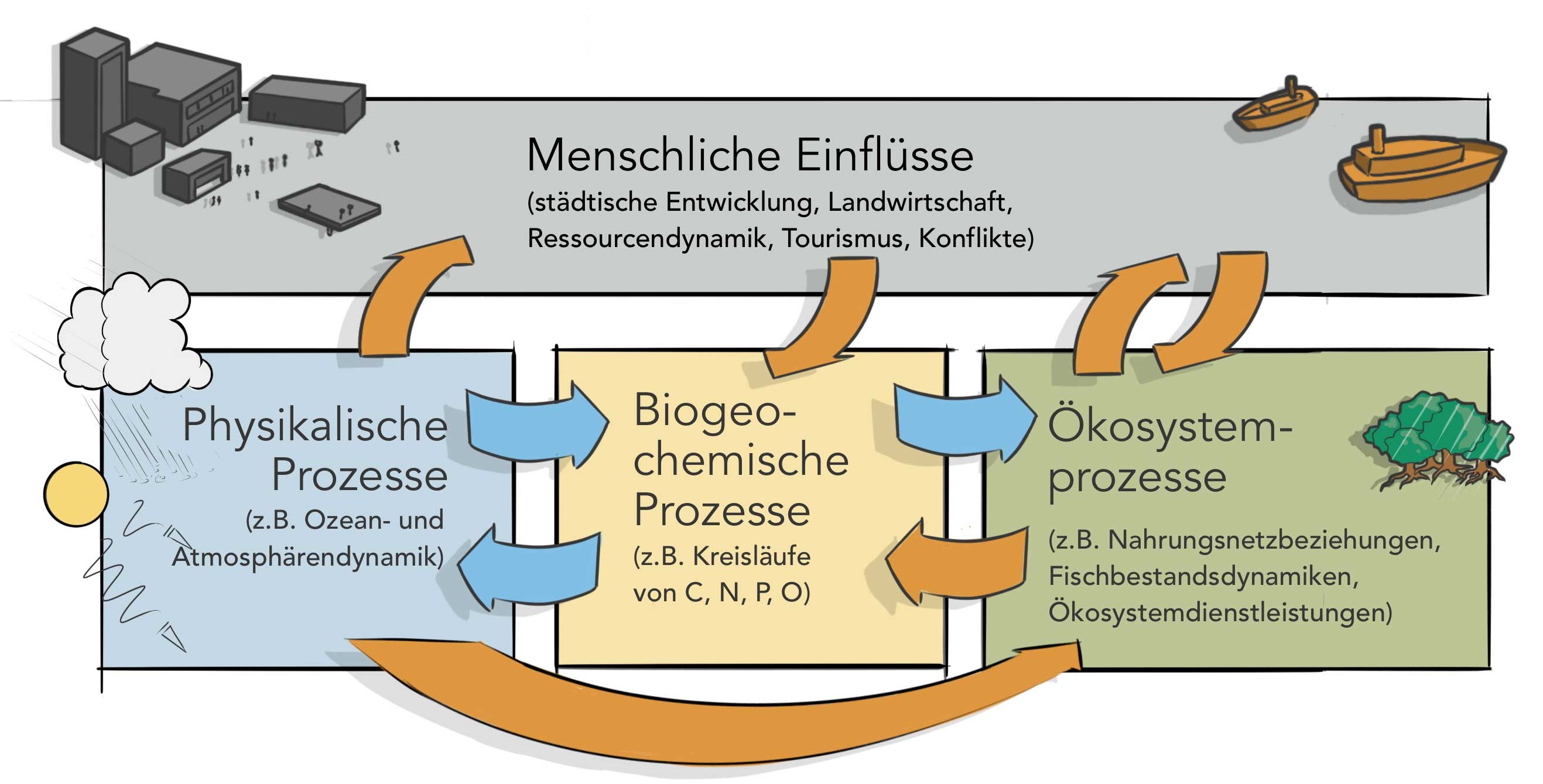
Abbildung 2: Darstellung der Wechselwirkungen von Teilprozessen in der Erdsystemmodellierung. Blaue Pfeile kennzeichnen etablierte Modellkopplungen, während orangefarbene Pfeile neue Wechselwirkungen hervorheben, die im Rahmen von TropEcS entwickelt werden sollen.
Wissenschaftliche Vision
Durch die Verknüpfung von Modellierung, konzeptionellem Wissen, Datenwissenschaft und Feldforschung wird TropEcS einen Rahmen schaffen, um zentrale Fragen der Küstenresilienz im Kontext des globalen Wandels zu untersuchen. Ziel ist die Entwicklung einer integrierten Küstenmodellierungsperspektive, die lokale und globale Skalen miteinander verbindet und sowohl natürliche als auch menschliche Dimensionen berücksichtigt.
Gerechte Partnerschaften und langfristige Forschungskollaborationen – sowohl zwischen dem Globalen Norden und Süden als auch innerhalb von Süd-Süd-Netzwerken – stehen im Zentrum dieser Vision. Diese Kooperationen sollen starke und inklusive Wissensgemeinschaften aufbauen und die nächste Generation von Wissenschaftlerinnen, Wissenschaftlern und Modellierenden befähigen, dieses Forschungsfeld weiterzuentwickeln.
TropEcS Arbeitsgruppen
Aufbauend auf der breiten Expertise des ZMT in den physikalischen, biogeochemischen, ökologischen und sozialwissenschaftlichen Bereichen wurden im Rahmen von TropEcS neue Arbeitsgruppen eingerichtet, die Modellierungsansätze weiterentwickeln und unterschiedliche Komponenten des Erdsystems miteinander verknüpfen:
- Erdsystemmodellierung
Die Arbeitsgruppe Erdsystemmodellierung untersucht neue Modellierungstechniken und -strategien zum Verständnis des Klimasystems, mit besonderem Fokus auf die Darstellung ozeanischer Turbulenz in tropischen Küstenregionen. Hierfür werden hochaufgelöste Simulationen durchgeführt, die einen möglichst großen Teil des Turbulenzspektrums direkt erfassen. Für Prozesse, die weiterhin unterhalb der Modellauflösung liegen, werde neue Parametrisierungen entwickelt und implementiert.
In diesem Rahmen wird untersucht, wie turbulente Transporte von Wärme, Energie und Tracern die lokale Zirkulation, biogeochemische Dynamiken, ökologische Prozesse und die Ausbreitung von Schadstoffen beeinflussen. Ziel der Forschung ist es, relevante Informationen für Küstenschutzmaßnahmen und wirtschaftliche Anpassungsstrategien bereitzustellen, um den Auswirkungen des Klimawandels in tropischen Küstenregionen zu begegnen. - Hydrogeochemischer Transport
Die Arbeitsgruppe Hydrogeochemischer Transport untersucht, wie tropische Landschaften, hydrologische Systeme und menschliche Aktivitäten gemeinsam biogeochemische Stoffflüsse vom Land ins Meer steuern. Die Gruppe kombiniert hydrologische, hydrogeologische und geochemische Modelle, um den Transport von Wasser, Nährstoffen und Schadstoffen aus Einzugsgebieten bis in den Küstenozean nachzuverfolgen. Sie erforscht, wie tropische Land-Ozean-Systeme auf Umweltveränderungen reagieren und wie sie ein nachhaltiges Küstenmanagement unterstützen können.
- Erdoberflächen und Öko-evolutionäre Dynamik
Die Arbeitsgruppe Erdoberflächen- und Öko-evolutionäre Dynamiken untersucht die Bedeutung funktioneller Diversität in terrestrischen und aquatischen Komponenten von Erdsystemmodellen. Forschungsschwerpunkte sind die Charakterisierung funktioneller Diversitätsmuster terrestrischer und aquatischer Organismen sowie die Modellierung der Koevolution von Leben und Landschaften.
- Ökosysteme und nachhaltige Ressourcen
Die Arbeitsgruppe Ökosysteme und nachhaltige Ressourcen möchte das Verständnis ressourcenbereitstellender mariner Ökosysteme vertiefen. Die Gruppe entwickelt und nutzt ökologische Modelle mit einem Schwerpunkt auf mechanistischen Ansätzen, die ökophysiologisches Wissen, hochaufgelöste Ozeanmodelle und die Beteiligung von Interessengruppen integrieren, um gemeinsam mit Küstengemeinschaften regionsspezifische und nachhaltige Anpassungsstrategien zu entwickeln.
- Zukunftsfähige Ozeane und Fischerei
Die Arbeitsgruppe Zukunftsfähige Ozeane und Fischerei untersucht mithilfe integrierter sozial-ökologischer Modellierung und Szenarioanalysen, wie Klimawandel und Ressourcennutzung tropische Meeresökosysteme, Fischereien und Lebensgrundlagen beeinflussen. Die Gruppe nutzt marine Ökosystemmodelle, um nachhaltige Fischereistrategien und Entwicklungspfade für resiliente tropische Ernährungssysteme zu analysieren.
Durch die Bündelung der Expertise dieser Forschungsgruppen etabliert TropEcS einen integrierten Rahmen, der physikalische Dynamiken, Ökosystemprozesse und Komponenten des Erdsystems über verschiedene Skalen hinweg verbindet. Ergänzt wird diese Forschung durch Beiträge aus den Sozialwissenschaften, der Ökonomie und der Biogeochemie, um die Darstellung tropischer Küstensysteme weiter zu verbessern und eine wissenschaftliche Grundlage für ein nachhaltigeres und widerstandsfähigeres Küstenmanagement zu schaffen.
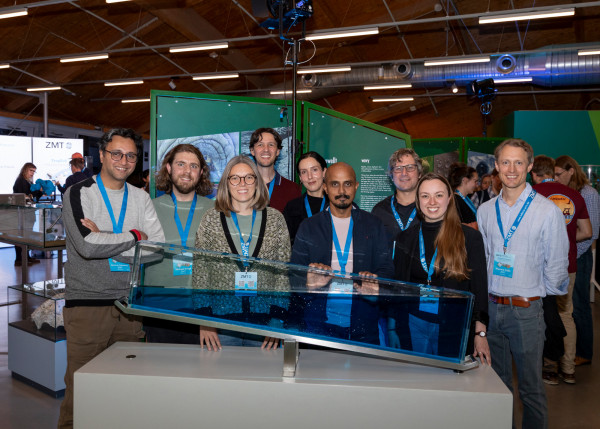
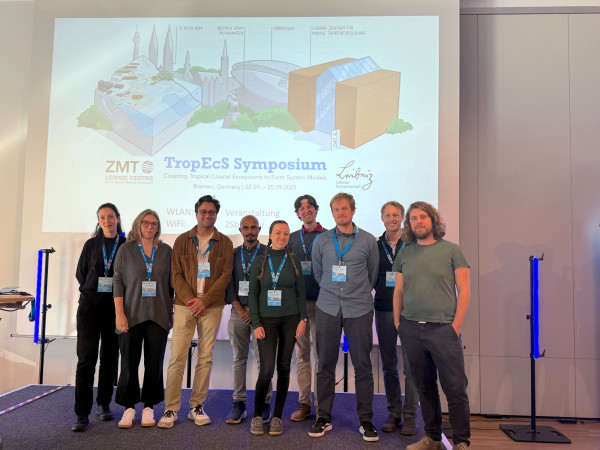
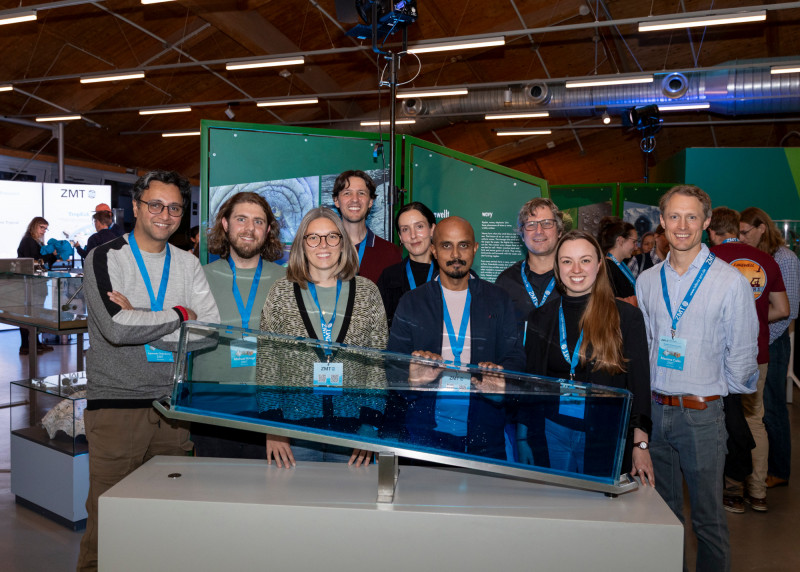
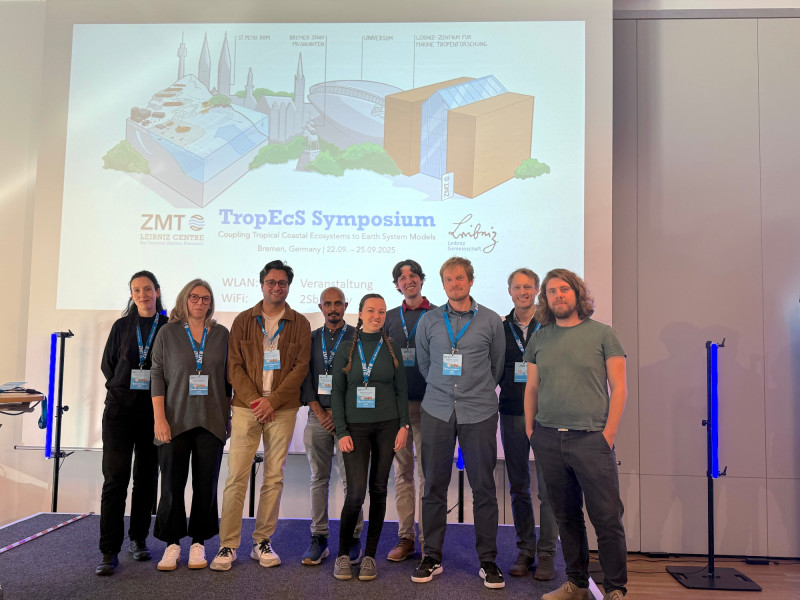
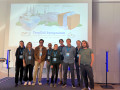
Team at the Universum: Subhendu Chakraborty, Michael Kriegl, Camilla Novaglio, Esteban Acevedo-Trejos, Gabriela Garcia, Murugan Ramasamy, Nils Brüggemann, Alexandra Klemme, Maxime Colin, | Photo: Jan Meier, ZMT


 Kontakte