



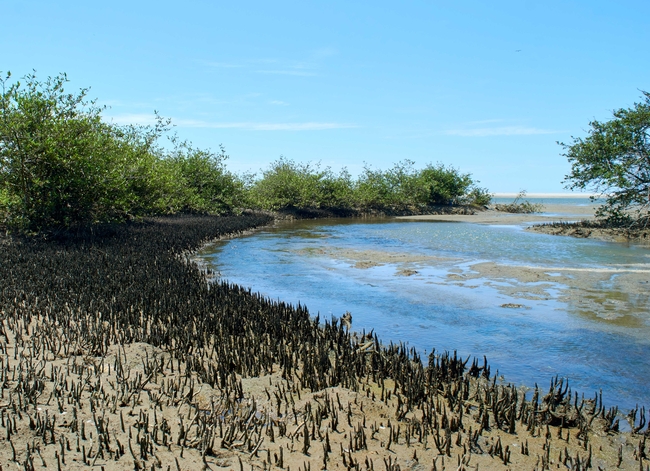
17/11/2026 | In the face of escalating climate change, a new scientific assessment underscores the vital role of ocean carbon sink – not just as climate regulators, but as essential components of global sustainability. A landmark study by researchers from the Leibniz Centre for Tropical Marine Research (ZMT), University of Bremen, Öko-Institut e.V., and University College London reveals that while blue carbon ecosystems such as mangrove forests, tidal marshes, or seagrass beds are among the most efficient natural carbon sinks on Earth, their protection must be expanded to include broader coastal and deep-sea carbon reservoirs.
The study highlights that these vegetated coastal ecosystems store vast amounts of carbon in their soils, with global carbon accumulation rates reaching 59 teragrams per year—equivalent to the annual emissions of 54 million people in Bangladesh and Colombia combined. Despite their small global area (less than 1% of the ocean), they contribute significantly to climate mitigation, accounting for 11% of the world’s annual sedimentary organic carbon sink. While 1 to 5% of these ecosystems were lost annually in the 20th century, recent conservation efforts have reduced mangrove loss to 0.2 to 0.4% per year.
Beyond blue carbon, the research identifies other critical ocean carbon sinks: coastal lagoons, unvegetated tidal flats, and estuaries. Together, these ecosystems store 242 teragrams of organic carbon in their sediments annually—nearly half the total sedimentary organic carbon sink in the ocean. The sediments of continental shelves and margins and the deep sea, though slow in accumulation, hold 56% of all marine carbon due to their vast area. Yet, these systems remain under– protected and under– researched.
The study calls for a paradigm shift in ocean conservation. While the 2023 Kunming– Montreal Global Biodiversity Framework’s “30×30” target – protecting 30% of land and sea by 2030– is a major step forward, current marine protected areas are often located in remote, low-impact zones, leaving vulnerable coastal ecosystems underrepresented. Measures to protect the ocean have seen a large increase in the past decade, however, they are still lagging behind protection on land. The new BBNJ Agreement, though focused on international waters, offers a framework for enhanced governance, but should integrate carbon storage as a key criterion for protected area designation
Economically, blue carbon projects are gaining traction through mechanisms like carbon credits, blue bonds, and debt- for-nature-swaps financing tools that can support community- led restoration. The Seychelles’ debt– for– nature deal and Kenya’s Mikoko Pamoja project exemplify how conservation can deliver climate, biodiversity, and livelihood benefits. However, challenges remain: accurate quantification of carbon storage, complex land tenure, lack of finance sector expertise, and risks of “blue carbon colonialism” threaten equity and long– term success.
The authors emphasize that protecting ocean carbon sinks is not just about climate change. It’s about safeguarding biodiversity, food security, coastal resilience, and sustainable development. With 2.15 billion people living in coastal zones, and many nations economically dependent on marine resources, protecting these ecosystems is both urgent and equitable.
In conclusion, the study urges policymakers to recognize ocean carbon sinks as a core component of climate and biodiversity strategies. By integrating carbon storage into conservation planning, expanding protection to underrepresented coastal and deep-sea areas, and supporting inclusive financing, the world can turn ocean ecosystems into powerful allies in the fight against climate change ensuring a healthier planet for generations to come.
Publication:
Jennerjahn, T.C., Bleischwitz, R., Reise, J., Schlüter, A. (2026). Protecting Major Ocean Carbon Sinks: 'Blue Carbon' and Beyond. Ocean Yearbook 40, p. 279 - 314.
Link: https://doi.org/10.1163/22116001-04001-011 (Open Access)
 Contacts
 Programme Areas
 Working Groups