



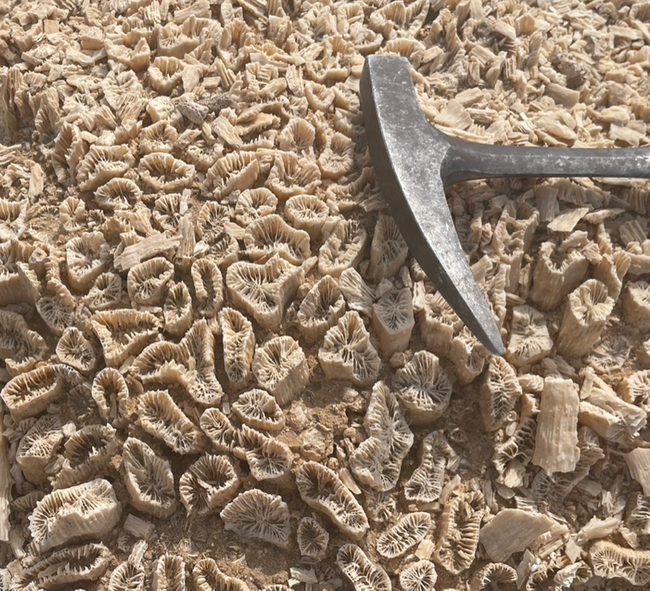
Marine heatwaves and coral bleaching events are increasing worldwide as ocean temperatures rise. Yet an essential question remains: how unusual is today’s warming compared to Earth’s natural climate history? The PALEORED project aims to address this question by studying fossil corals from the Red Sea, one of the warmest and saltiest marine environments on Earth. These corals lived during the Last Interglacial period, around 125,000 years ago, when global temperatures were about 1-2 °C warmer than pre-industrial levels and sea level was several meters higher than today - conditions comparable to those expected in the coming decades.
Unlike most climate archives, corals grow continuously and preserve highly detailed environmental information in their skeletons. Using exceptionally well-preserved fossil corals, PALEORED will reconstruct past sea surface temperatures, seasonal variability, seawater carbonate chemistry, and potential heat-stress events at monthly to annual resolution. This makes it possible to detect not only average climate conditions, but also extremes that are most damaging to coral reefs and their impacts on coral metabolic processes.
By comparing these ancient records with modern observations, the project will provide a natural baseline for evaluating present-day marine heatwaves and coral bleaching. The results will improve our understanding of coral thermal resilience, clarify the role of climate extremes versus gradual warming, and help test climate models used to predict future ocean conditions. In doing so, PALEORED contributes directly to assessing the risks that ongoing, human-driven warming poses to coral reef ecosystems worldwide.
 Contacts
  Working Groups
  Project flyer for download