



The context of this project regards the severe global, regional and local environmental changes affecting the ecosystems along the densely populated West Coast of Africa . The project acknowledges that possibilities and consequences of the adaptation of biological and social systems to these progressive changes are to be investigated through different, mutually complementary research approaches.
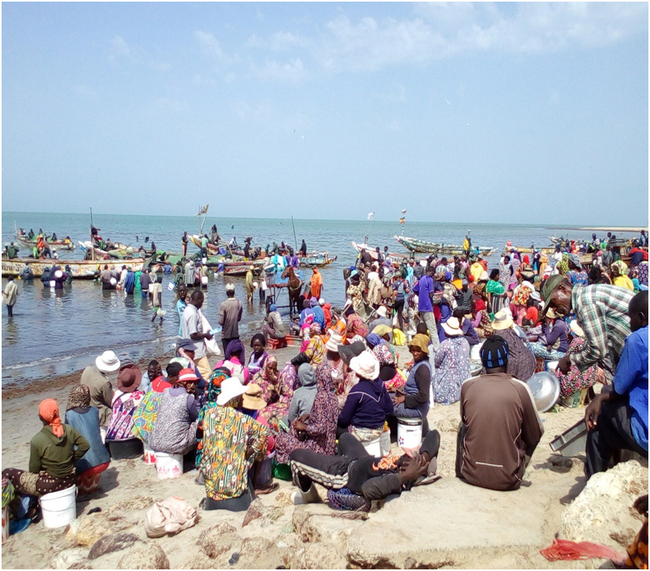
Fisheries and Marine Protected Area governance in Senegal is one of the doctoral projects of this program. The Background of this research is related to the growing number of conservation zones on the coastal areas traditionally occupied by artisanal fishing and the influence of MPAs governance on the fishery resources and management. It addresses the implications of the presence of a multiplicity of bodies involved in the governance of MPAs and fisheries.
The overall objective of this study is to understand how is the relationship between protection and fishing governed and the implications for artisanal fishers. It aims at answering to the following questions:
- How did this governance change over time, what drove this change and what have been the consequences for artisanal fishers?
- To what extent institutional arrangements governing MPA and fisheries fit across scales?
- Did this increase the adaptive capacity of artisanal fishers?
On a more open level, there is scope for comparison jointly with a twin doctoral dissertation developed in the North Sea within the CREATE project.
This research intends to use Network of Adjacent Action Situation (1) and its parent framework, the Institutional Analysis and Development framework (2), for the assessment of fisheries and MPA institutional arrangements and to contribute to the development of this approach for the study of commons. For this purpose, institutional change and power theories will be used for analysis.
 Contacts
  Programme Areas
  Working Groups
  Project flyer for download