


Welcome to the working group of Institutional Economics and Governance
Overview
The working group “Institutional Economics and Governance” analyses the interactions between resource users, the governance system and ecological peculiarities within complex social-ecological systems in the marine tropics. Institutions are central for understanding collective action and economic exchange. Following prominent scholars in this field, we understand institutions as human-made and widely shared rules that help people coordinate interactions with others, encompassing formal (written) rules, such as laws and policies, and informal ones, such as norms or customs. A main research focus of the IEG working group lies in the analysis of how institutions affect the decision-making of resource users in coastal areas. What are appropriate property rights systems to ensure sustainable use? How do actors aim to change property rights systems, or more generally, what drives institutional change in coastal areas? All this is done with the aim of understanding how societies can achieve and transform towards institutional systems that are ecologically sustainable, promote well-being for humankind and provide opportunities for everybody in society. This is an important issue in dynamically and quickly developing blue economies around the world. A main focus of the working group is investigating the above topics in relation to artisanal fisheries, marine conservation and aquaculture. However, our research questions can also be applied to other sectors or issues of the blue economy. Geographically, we have a focus on West Africa (Mauritania, Senegal, Ghana,…), North of South America (Peru, Colombia, …), and Indonesia, working with local partners and institutions. With our focus on institutions and governance of fisheries, aquaculture and marine conservation, our working group is an important pillar of the Programme Area Coastal Resources, with the clear need and ambition to interact with other Programme Areas.
The Approaches
IEG started from an institutional economics (old and new) and Ostromian perspective, which is still the main analytical lens we use. However, we also realised that there are substantial white spots when using only an institutional economics perspective (e.g. questions on power or equity (IASC-ECN Power Collective et al. 2026). Therefore, we also use political economy, political ecology and whatever helps us to understand our observations and, together with resource users, to come up with scientifically informed and societally relevant governance suggestions.
We are convinced that understanding the use of marine and coastal common pool resources requires a multitude of different methods, knowledges and disciplines (Partelow et al. 2023). Therefore, we use various methods and methodologies for answering our overarching research questions. We have the most experience with qualitative case studies, with a particular current interest in the role of artificial intelligence for qualitative social sciences (Schlüter & Bavinck 2026). However, we also engage in different forms of experiments (lab, artefactual, or natural) and survey work (Moser et al 2026, Javaid 2016). Lastly, we particularly use Fuzzy Cognitive Mapping (Makris et al 2024; Nagel et al 2026), on the one hand, to better understand Mental Models of actors, which are crucial for governance changes, and, on the other hand, to have a tool at hand to develop jointly with actors potential governance alternatives for a transformation towards a more sustainable future (Schlüter 2025). We strongly believe in and engage in co-design, inclusive and participatory research methods. Apart from scientific publications, we co-produce policy briefs and engage in science-society discussions on sustainable solutions and transformations.
Research Themes
- Institutions, rights and collective action
The sea is becoming more crowded. Fishing, aquaculture, tourism, energy and conservation all place claims on the same coastal space. Many fishing communities depend on rights that often are informal. Rules and rights decide who can use resources, who benefits and who bears the costs. In this theme, we study how laws, local norms and property rights shape access and cooperation, and how power affects whose claims are accepted. The central question is: how rules, rights and power relations shape resource access and collective action?
Examples of sub-themes:
- Ocean privatisation and the process of property (Collection MAST)
- Relationship between artisanal fishing and conservation in Senegal (Senghor & Schlüter 2026)
- Territorial Use Rights for fishers in Indonesia (Furqan & Schlüter 2024)
- Institutional change in the marine realm (Banikoi 2024, Schlüter et al. 2025)
- Relationship between tourism and fisheries at the nexus of marine conservation, blue growth and local livelihoods in Tanzania ( Schwindenhammer)
- Governance change, adaptation and transformation
The coastal and marine realm is changing quickly due to economic, ecological and social changes. This requires actors to adapt. The aim is to transform to a more sustainable state in relation to ecological, social and economic goals. We want to help society in this process of transition with our marine social science expertise. The central question is: how do coastal communities transition towards a more social, economic and ecologically sustainable state?
Examples of sub-themes:
- Adapting to climate change in aquaculture production in Sechura Bay Peru (Humboldt Tipping, Makris et al 2024)
- Foster artisanal processing in Mauritania and Senegal to increase the use of pelagic fish for direct human consumption (Reimagining Food Systems)
- Solving environmental and social collective challenges in the emerging field of aquaculture (Partelow et al. 2023, Partelow et al. 2022)
- Blue justice in the field of Mangroves (Yollande Tankeu).
- Governance for conservation and sustainable resource use
Conservation goals and management rules do not guarantee results. Their success depends on how governance works in practice, whether it has the support of those involved, and whether management can continue over time. We examine the conditions that help conservation and resource management deliver ecological outcomes while supporting livelihoods and respecting rights. The central question is: what makes governance effective, equitable and able to sustain its outcomes?
Examples of sub-themes:
- Social-Ecological Keystone Places for Transformative Change in Safeguarding Coastal Biodiversity (SKETCH)
- Advancing equitable and effective marine OECM framework (Estradivari et al. 2022, Estradivari et al., 2024)
- The Marine OECM Guide
- Societal knowledge and capacity building for sustainable marine transformation (CREATE)
- Marine social sciences
The above-mentioned changes are taking place in a complex social-ecological system. Traditionally, marine science related only to natural sciences. Therefore, social sciences are much less mature and need to be built up. In this theme we are asking: what kind of social science is needed to understand the human dimension of coastal and marine social-ecological systems?
Examples:
- DAM Strategy Group on Social Science and Humanities
- Pasblue, a joint master programme on sustainable blue economy
- Joint diagnosis of what marine social science should be (Bogusz et al. 2024, Partelow et al. 2023)
Selected Publication Highlights
Banikoi, H. (2024). Legal pluralism, ideology, and institutional change: the evolution of institutions for coastal resource governance in Ghana. Journal of Institutional Economics, 20, e32, Article e32. https://doi.org/10.1017/S1744137424000225
Bogusz, T., Holtappels, M., Hodapp, D., Schlüter, A., & Breckwoldt, A. (2024). Nature and society in marine research - Perspectives for interdisciplinary cooperation in the Anthropocene. Zenodo. https://doi.org/10.5281/zenodo.14887580
Furqan, R., & Schlüter, A. (2024). Fishing logbook as stewardship action within TURF management in Kepulauan Seribu Marine National Park, Indonesia. Ocean & Coastal Management, 252, 107114. https://doi.org/10.1016/j.ocecoaman.2024.107114
Javaid, A., Kulesz, M. M., Schlüter, A., Ghosh, A., & Jiddawi, N. S. (2016). Time Preferences and Natural Resource Extraction Behavior: An Experimental Study from Artisanal Fisheries in Zanzibar. PLOS ONE, 11(12), e0168898. https://doi.org/10.1371/journal.pone.0168898
Makris, J., Kriegl, M., Nagel, B., & Schlüter, A. (2024). Participatory modelling of institutional dynamics: Navigating epistemological challenges in fuzzy cognitive mapping. In F. Nunan (Ed.), Researching Institutions in Natural Resource Governance: Methods and Frameworks. Routledge. https://doi.org/10.4324/9781032624679
Moser, D., Vance, C., Collard, J., Rieger, M., Anggraini, E., Merico, A., & Schlüter, A. (2026). Barrier or Enabler? Cross-Cultural Evidence on Cognitive Biases in Climate Protection. Earth's Future, 14(8), e2025EF007697. https://doi.org/10.1029/2025EF007697
Partelow, S., Asif, F., Béné, C., Bush, S., Manlosa, A. O., Nagel, B., Schlüter, A., Chadag, V. M., Choudhury, A., & Cole, S. M. (2023). Aquaculture governance: five engagement arenas for sustainability transformation. Current Opinion in Environmental Sustainability, 65, 101379. https://doi.org/10.1016/j.cosust.2023.101379
Partelow, S., Schlüter, A., Ban, N. C., Batterbury, S., Bavinck, M., Bennett, N. J., Bleischwitz, R., Blythe, J., Bogusz, T., Breckwoldt, A., Cinner, J. E., Glaser, M., Govan, H., Gruby, R., Hatje, V., Hornidge, A.-K., Hovelsrud, G. K., Kittinger, J. N., Kluger, L. C.,…Villasante, S. (2023). Five social science intervention areas for ocean sustainability initiatives. npj Ocean Sustainability, 2(1), 24. https://doi.org/10.1038/s44183-023-00032-8
Partelow, S., Schlüter, A., O. Manlosa, A., Nagel, B., & Octa Paramita, A. (2022). Governing aquaculture commons. Reviews in Aquaculture, 14(2), 729–750. https://doi.org/10.1111/raq.12622
Schlüter, A., & Bavinck, M. (2026). Ocean privatisation: the ‘processes of property’ occurring in the world’s maritime domains. Maritime Studies, 25(4), 58. https://doi.org/10.1007/s40152-026-00515-7
Schlüter, A., Núñez Beingolea, C., & Nagel, B. (2025). Recomiendaciones políticas: de los modelos mentales a seis puntos de intervención en el sistema de recursos marinos de Sechura. https://doi.org/10.21244/zmt.2026.003
Schlüter, A., van Assche, K., Fall, S., Senghor, K., Banikoi, H., & Kane, E. (2025). Theories of institutional change and marine privatisation. Maritime Studies, 24(1), 17. https://doi.org/10.1007/s40152-025-00406-3
Senghor, K., & Schlüter, A. (2026). Unpacking power dynamics and actor interactions across fisheries and marine protected areas governance: a comparative study of Saint Louis and Sangomar, Senegal. Maritime Studies, 25(3). https://doi.org/10.1007/s40152-026-00501-z
Collective, I.-E. P., Schwindenhammer, D., Suresh, L., Gautam, T. P., Unnikrishnan, H., Dehmel, N., Hackmann, V., & Gerullis, M. (2026). Toward Making Power More Explicit in the IADF: A Review and Diagnostic Approach to Power Theories. International Journal of the Commons. https://doi.org/10.5334/ijc.1595
Estradivari, Agung, M. F., Adhuri, D. S., Ferse, S. C. A., Sualia, I., Andradi-Brown, D. A., Campbell, S. J., Iqbal, M., Jonas, H. D., Lazuardi, M. E., Nanlohy, H., Pakiding, F., Pusparini, N. K. S., Ramadhana, H. C., Ruchimat, T., Santiadji, I. W. V., Timisela, N. R., Veverka, L., & Ahmadia, G. N. (2022). Marine conservation beyond MPAs: Towards the recognition of other effective area-based conservation measures (OECMs) in Indonesia. Marine Policy, 137, 104939. https://doi.org/10.1016/j.marpol.2021.104939
Estradivari, Kartika, I., Adhuri, D. S., Adrianto, L., Agung, F., Ahmadia, G. N., Bejarano, S., Campbell, S. J., Fachri, F. R., Kushardanto, H., Marlessy, C., Pane, B., Puebla, O., Purnama, R. C., Santiadji, I. W. V., Suherfian, W., Tillah, M., Widodo, H., Wild, C., & Ferse, S. C. A. (2024). Prospective ecological contributions of potential marine OECMs and MPAs to enhance marine conservation in Indonesia. Ocean & Coastal Management, 258, 107411. https://doi.org/10.1016/j.ocecoaman.2024.107411
Nagel, B., Nunez, C., Nox, C., Kriegl, M., & Schlüter, A. (2026). Archetypes of mental model diversity: insights from fuzzy cognitive mapping of a marine social-ecological system in Peru. Sustainability Science.
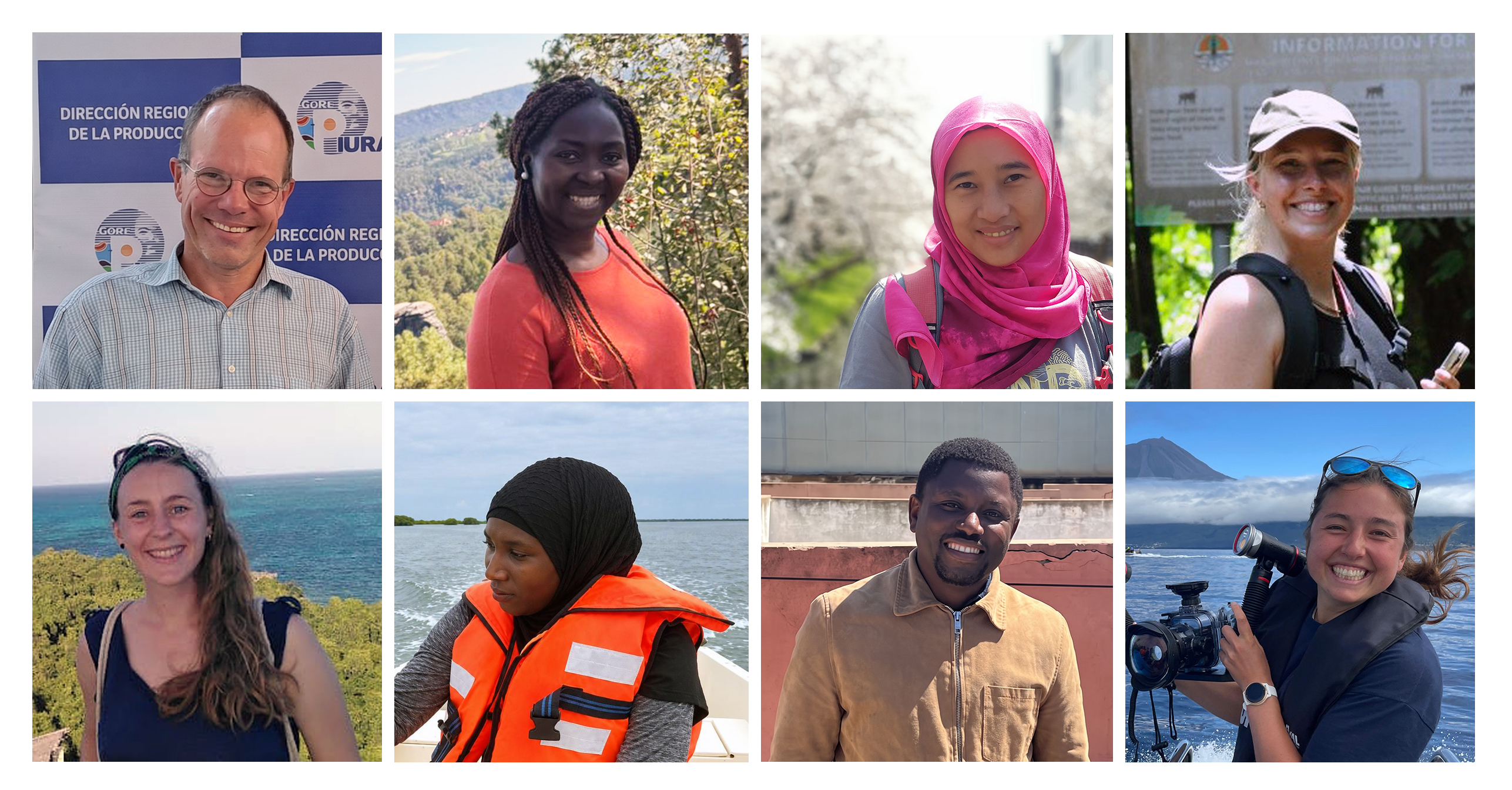
 WG Members
 Programme Area
 Publications WG Institutional and Behavioural Economics
 Policy Briefs
 Research Projects
 News / Current
 Events