



Social-Ecological Keystone Places for Transformative Change in Safeguarding Coastal Biodiversity
Coastal and marine ecosystems are vital for biodiversity, livelihoods, and cultural identity, yet they are increasingly under pressure from climate change, overexploitation, and pollution. At the same time, many of these environments are sustained by the knowledge, practices, and stewardship of Indigenous Peoples and Local Communities (IPLCs), whose contributions typically remain underrepresented in conventional conservation approaches.
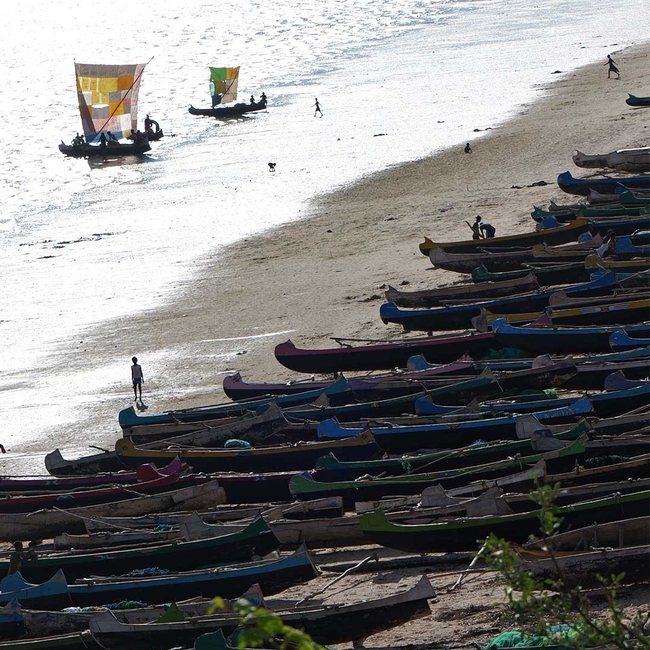
The SKETCH project focuses on Social-Ecological Keystone Places (SEKPs) – coastal and marine areas where strong and dynamic connections between people and nature maintain ecological functions, cultural values, and governance systems. Through case studies in Brazil, Madagascar, Indonesia, Taiwan, and the Cook Islands, SKETCH applies a participatory inter- and transdisciplinary approach to understand how these places are valued, governed, and managed.
The project combines local and Indigenous knowledge with standardized scientific methods, including participatory mapping, scenario development, and innovative biodiversity monitoring tools such as eDNA. This integrated approach creates space for diverse knowledge systems, supports reflective learning, and enables the inclusive development of context- specific conservation strategies that deliver benefits to IPLCs. By centering IPLCs as key knowledge holders and partners, SKETCH contributes to the co-production of data, tools, and locally-relevant policy insights. At the same time, SKETCH advances pathways for integrating SEKPs into global conservation frameworks such as Other Effective Conservation Measures (OECMs), thereby supporting more equitable, locally grounded and transformative biodiversity safeguarding.
 Contacts
  Programme Areas
  Working Groups
  Project Flyer for download