


From individual offices to a new working culture: Try out silent boxes and multi-space areas to see how they work for you
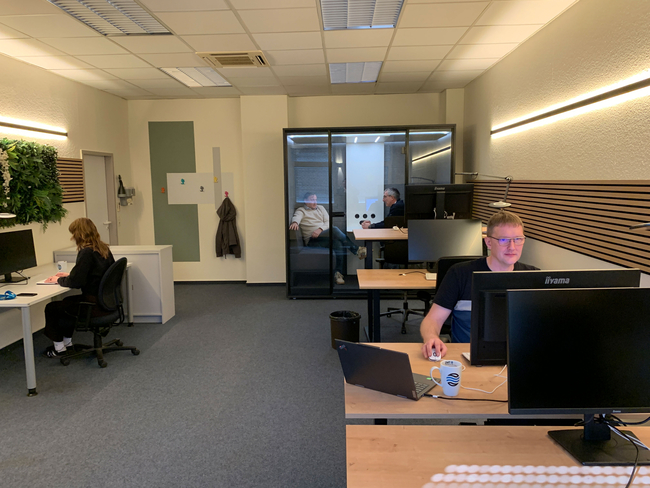
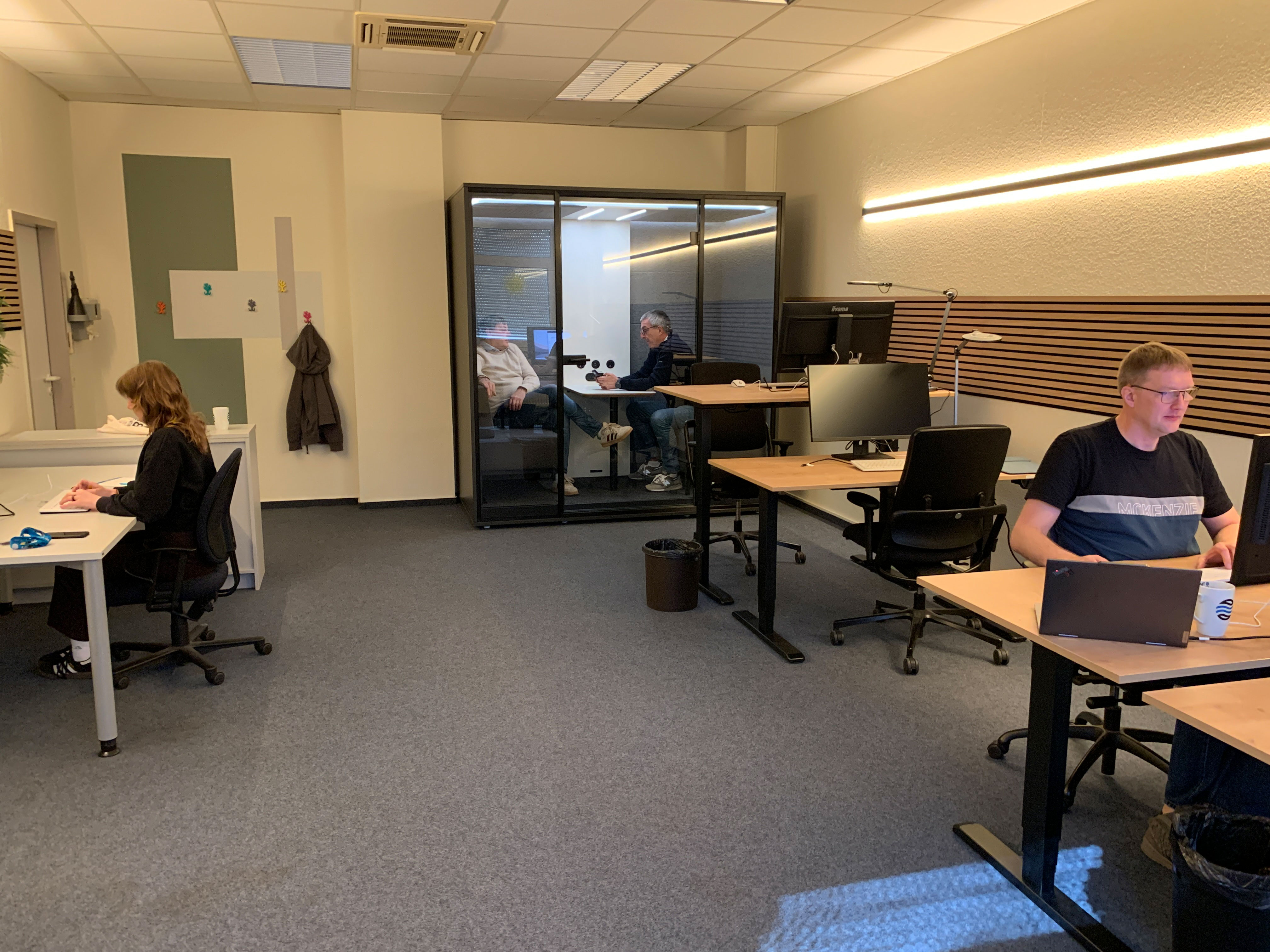
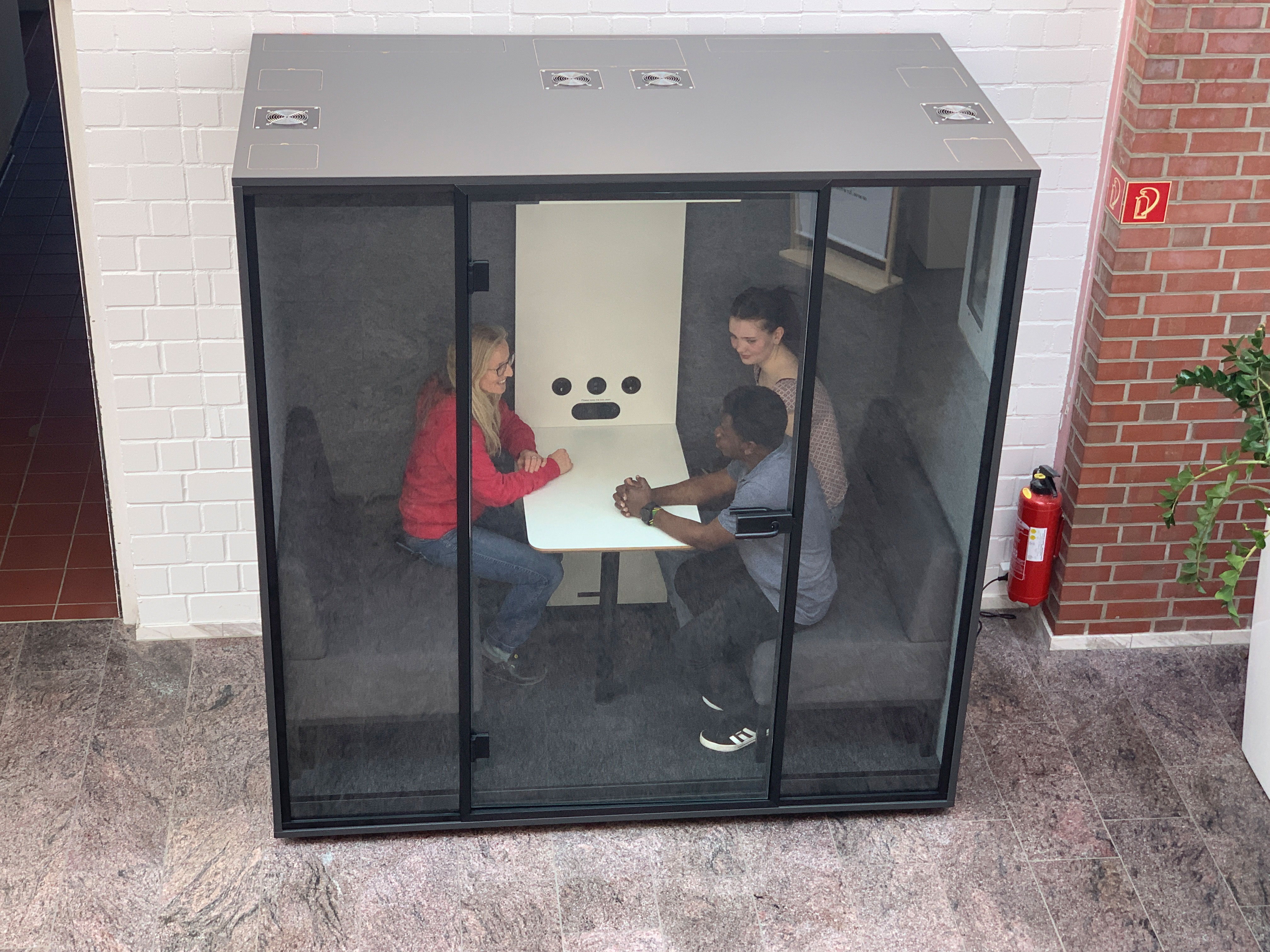
Something is happening at the ZMT building on Fahrenheitstraße 6. Anyone entering the foyer through the main entrance will immediately notice a large black box with long windows, a table and two benches inside. Inside, there is room for four people to comfortably sit down for a chat – undisturbed and unheard from the outside. The new cubicles have a bit of a futuristic feel to them; they are often called office pods. And now the journey into the future continues from the pods to the first floor of the main building. Room 1101 is the ZMT’s new ‘multispace’. Here, two soundproof pods for two and four people have also found their place. In addition, the room is equipped with five desks, most of which are height-adjustable so you can work whilst standing up. Laptops can be docked onto large monitors on the desks, and there are comfortable office chairs, warm colours and a touch of greenery. This space is more than just an extra office and offers a glimpse of the working environment at the new ZMT.
The idea behind the newly equipped spaces is to give ZMT colleagues the opportunity to work in an environment that closely resembles the new concept of the future ZMT building. A silent box (office pod) has now also been installed on the third floor of the building at Wiener Straße 7. “We want to show our colleagues how we will be working in the new building in future,” explains Christian Brandt, who together with Stéphane Mehat has been preparing and fitting out the space over the past few weeks.
Work flexibly and shape the future together
Room 1101 has now been open to everyone since mid-March and colleagues are encouraged to try it out, test the new facilities and help to shape the space. People can work here for a few hours or even stay for several days, provided desks are free. This endeavour marks an important departure from the current working model at ZMT: slowly moving from fixed allocations to flexible use. It makes working more dynamic – and also a little more unpredictable. “I’d come here in the morning and might not even know who I’ll be working with today,” says Nicolas Dittert about the nature of the space in room 1101. At ZMT, the commercial director is responsible for all matters relating to the new building. It is precisely this element of chance that creates new encounters and opens up different forms of collaboration, says Dittert.
With around two and a half years to go before the new building is completed, staff now have the opportunity to try things out, discard ideas and rethink approaches. The new workstations and booths – designed as quiet spaces for phone calls, video conferences or focused work – can now be tested in day-to-day use. “What do we actually need for them to work well?” is one of the key questions to be answered.
The point, however, is not just about furniture or technology, but above all about working together. And where many people collaborate in a more open way, new rules need to established. Issues such as noise levels, behaviour in the room or consideration for others suddenly become more important. “Does it make sense for someone to be rustling their sandwich bag or clinking their yoghurt pot here all the time?” asks Dittert. Dealing with conversations or spontaneous disturbances is also part of it. Solutions could include, for example, noise-cancelling headphones and, of course, a set of jointly developed ‘house rules’.
It is important to note that these rules for collaborative working should not be imposed by management, but established by ZMT employees themselves. Organisational issues will also arise. Quiet spaces such as the silent boxes should not, for example, be permanently occupied by individual staff members. “It would be counterproductive for someone to reserve a box as a private office for two months,” says Christian Brandt, Head of Technical Services at ZMT and one of the project coordinators for the new building. Instead, flexible booking systems are being looked at to ensure fair use.
At the same time, new ideas are emerging for handling personal work materials. As fixed desks will be phased out, lockers will become more important in the new building, in order to store documents and personal belongings. Again a set of shared rules comes into play again: “What happens if everything is still left on the desks in the evening? Does someone tidy up, or is everything simply thrown away?” asks Nicolas Dittert. There are no definitive answers yet.
Initial experiences – and a look ahead
Initial feedback from staff suggests that the new collaborative approach is effective. 'If everyone is allowed to work here, then I don’t need my private office anymore,' said one colleague, while another commented: 'If this is a taste of what's to come in the new building, then let's move in tomorrow.'Such statements demonstrate the desired momentum. The space is designed to inspire enthusiasm and encourage people to actively help shape new ways of working, not just accept them out of necessity. “Those who enjoy working in the new spaces become advocates,” explains Nicolas Dittert. “Through positive experiences, the new working culture can gradually spread – even to those who are still sceptical about the change.”
At the same time, one thing is clear: 'We won't be able to please everyone,' says Stéphane Mehat. The aim is to create an offering that works for the majority and, in the long term, shows the advantages of flexibility and collaboration.
Therefore, multispaces and silent boxes are more than just a temporary solution; they are the first concrete step towards the new building. Perhaps even more importantly, they point the way to a new world of collaboration. Once the move is finally complete, much of it will already feel familiar. As Nicolas Dittert puts it: “You just grab your bag and walk over, and it's actually no different from before because we already know what to expect.”
 Contacts