
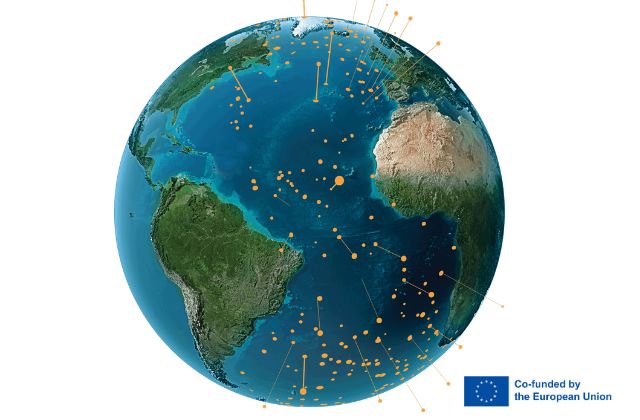
ZMT becomes official supporter of the “All-Atlantic Ocean Research and Innovation Alliance” | Global AAORIA forum in Brazil
The Leibniz Centre for Tropical Marine Research (ZMT) has joined the All-Atlantic Ocean Research and Innovation Alliance (AAORIA) as an official supporter, strengthening its role in international ocean science diplomacy ahead of the Alliance’s 2026 High-Level Forum in Brazil. After having been engaged in the initiation of the trans-Atlantic of the European Commission and having contributed to its success for many years under the lead of our former colleague Werner Ekau, the move places ZMT within a growing transatlantic network of countries and institutions working to advance science-based solutions for ocean governance and sustainable marine management.
“By joining AAORIA, we are reinforcing our commitment to international cooperation in ocean science,” says Martin Zimmer, who is coordinating the collaboration on behalf of ZMT. “Addressing global ocean challenges requires strong partnerships across regions, disciplines and sectors – this is exactly what the All-Atlantic Alliance provides.”
AAORIA unites countries from both sides of the Atlantic Ocean to support evidence-based policymaking at national, regional and international levels. The initiative is underpinned by the All-Atlantic Declaration, signed in 2022 in Washington, D.C., by Argentina, Brazil, Cabo Verde, Canada, Morocco, South Africa, the United States and the European Union. Since then, Norway, the United Kingdom, Iceland, Senegal and Ghana have joined, reflecting growing international commitment.
AAORIA supporters include regional and international organisations, non-governmental organisations, businesses, or research or academic institutions. They are not Partners to AAORIA, but they can contribute to the objectives of AAORIA and participate in its activities, including the AAORIA Forum.
High-level stakeholders met at the 2026 All-Atlantic Forum in Brazil
The 2026 AAORIA Forum took place in Salvador, Bahia, Brazil on 15–16 April. As the Alliance’s flagship annual event, it brought together policymakers, scientists, industry representatives and civil society from across the Atlantic region. The Forum was hosted by the Brazilian Ministry of Science, Technology and Innovation (MCTI).
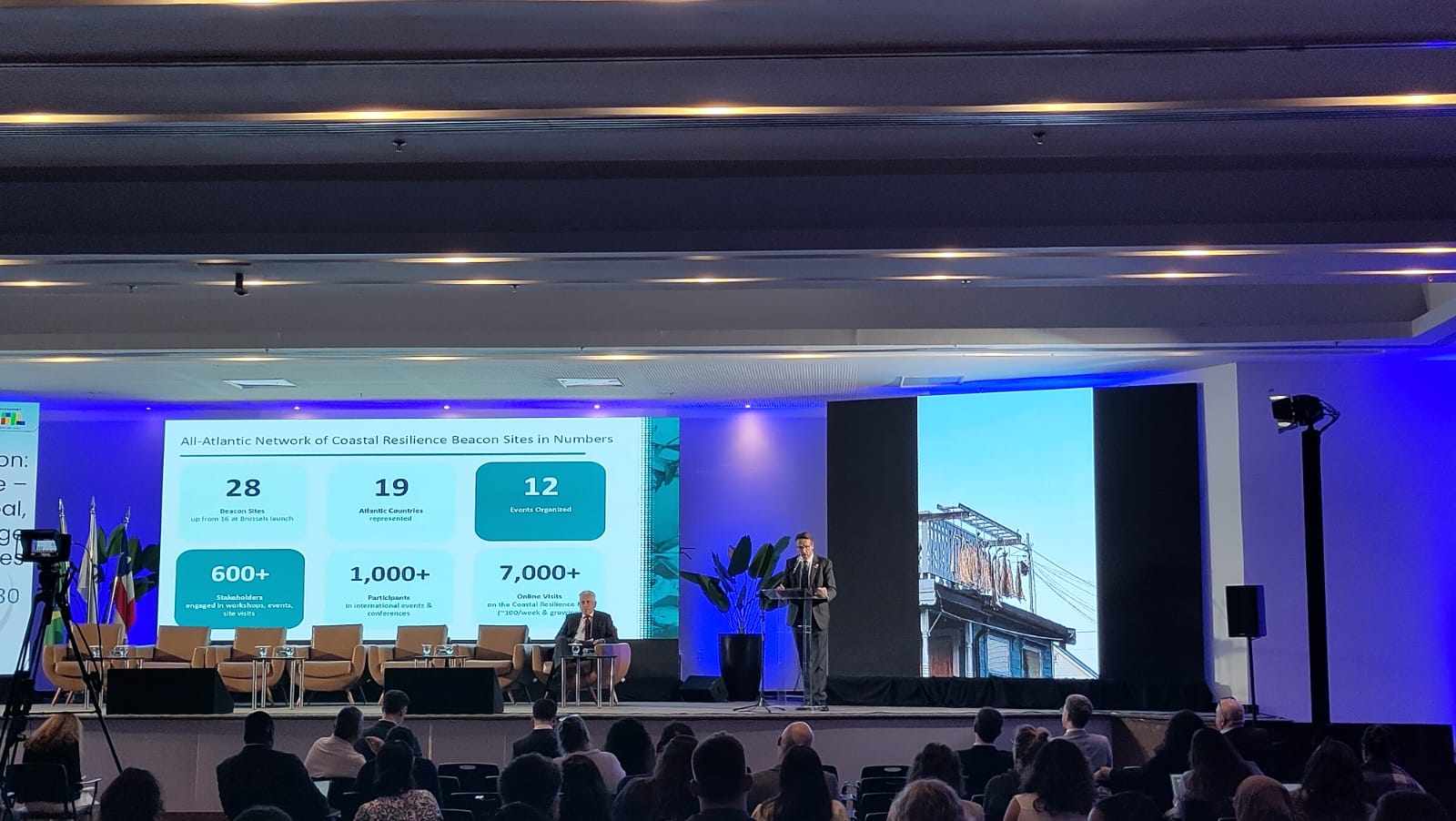
ZMT was actively involved in the programme: Martin Zimmer presented the long-standing link between ZMT and AAORIA and summarized the outcomes of the workshop of the All-Atlantic Network of Coastal Resilience Beacon Sites on 16 April.
A central element of ZMT’s contribution was the side event “All-Atlantic Network of Coastal Resilience Beacon Sites – From Local to Global: Sharing Knowledge and Experiences“, held on April 14. Véronique Helfer from delivered the opening remarks and contributed a short impulse presentation, sharing her perspective on scientific and local knowledges integration in research activities related to coastal resilience, with its associated challenges, considering both the ecological and societal dimensions of coastal resilience. She also participated in a panel discussion aiming at identifying avenues for the Network to become an effective knowledge partner to local communities and reinforcing the pan-Atlantic coastal resilience community.
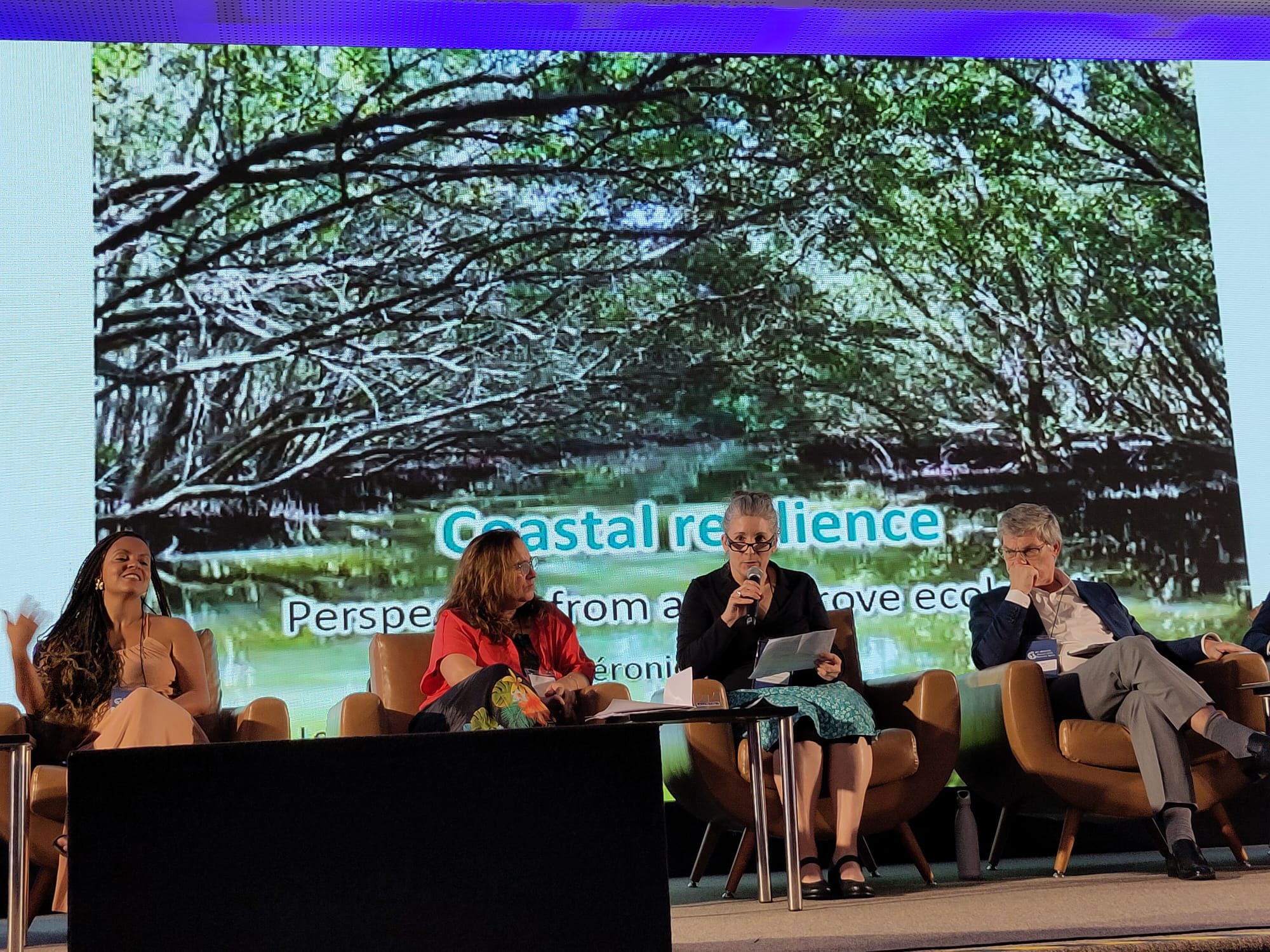
The workshop brought together high-level contributions, starting with impulses by James Morrison (Healthy Planet, DG R&I, European Commission), Justin Munyaneza (Fisheries and Oceans Canada / Pêches et Océans Canada) and Alexandra-Sophie Roy (KDM / German Marine Research Consortium, ZMT, OKEANO and Beacon Sites Network). A keynote was delivered by Tiago Jordão Porto Santos (Director of Environmental Policy and Planning SEMA, Secretariat of the Environment of the State of Bahia).
Further perspectives came from Uruguay (Luciana Echevarría Fratti, Montevideo), Ghana (Lydia Sasu, Development Action Association), and Brazil (Bárbara Pinheiro, Maré de Ciência, Santos, São Paulo; Lana Resende de Almeida, Universidade Federal da Bahia; Armin Mathis, Universidade Federal do Pará, Belém). The session was moderated by Max Gruenig (Georgetown University and Co-Founder, POCACITO Network).
“This side event was the occasion to exchange with various actors (scientists, practitioners and political decision-makers from across the Atlantic Ocean) on the major challenges coastal communities are facing, with an emphasis on the Brazilian experience, and on how we can join forces and share knowledges to strengthen coastal resilience across the Atlantic,” said Véronique Helfer. “The outcome of this event will help shape future activities of the Network of Coastal Resilience Beacon Sites, and shall provide best practices for sharing scientific and local knowledges and disseminating local experiences to the international community.”
Martin Zimmer‘s major take-homes from the event:
- Coastal communities increasingly feel the pressures and need to foster their resilience NOW!
- There are different ways of losses and damages: not only physical, but also moral, psychological, institutional and those that affect people's dignity.
- Vulnerability of both ecosystems and communities must be thought together, BUT are the scales of ecological and societal resilience the same, and how are they related?
- Actions on coastal resilience must encompass causes and consequences of environmental and anthropogenic pressures. International collaboration is essential: we need knowledge-exchange across borders, sectors and disciplines.
- Solutions must be scalable, adaptable and grounded in science, BUT we often observe limited trust of local actors in science.
- Solutions require diverse voices and experiences, and we need to more honestly and sincerely involve, and engage with, local actors and their perspectives and different types of knowledge – not just as lip service, but really doing it.
- We need to align science, policy and innovation with the views of local communities, BUT traditional knowledge is being lost.
- We must enable coastal communities to shape their own future
- As a fisher woman from nearby Salvador coined it: "Nothing about us without us!
Summary of outcomes of the 2026 All-Atlantic Forum on the AAOIRA website
see: https://allatlanticocean.org/news/summary-of-outcomes-of-the-2026-all-atlantic-forum-from-the-high-level-board-of-the-all-atlantic-ocean-research-and-innovation-alliance-aaoria
The All-Atlantic Fora serve as a platform to showcase scientific advances, launch new initiatives and define priorities for transatlantic cooperation. Building on previous meetings, the 2026 Forum aims to accelerate the implementation of the All-Atlantic Declaration through closer international collaboration and joint action.
About the All-Atlantic Ocean Research and Innovation Alliance (AAORIA)
The All-Atlantic Ocean Research and Innovation Alliance (AAORIA) is an ocean science diplomacy initiative uniting countries from both sides of the Atlantic Ocean in contributing to the science needed to support ocean policy, governance and management on domestic, regional and international scales in the Atlantic region.
AAORIA fosters a large and inclusive All-Atlantic community, advancing science cooperation in line with international law. The ultimate shared goal is to ensure the conservation and sustainable use of the Atlantic Ocean. AAORIA and its goals are underpinned by the All-Atlantic Declaration signed in 2022 in Washington DC by Argentina, Brazil, Cabo Verde, Canada, Morocco, South Africa, the United States of America and the European Union, with ever growing interest and support from further countries and partners. Since 2022, Norway, the United Kingdom, Iceland, Senegal and Ghana have also joined the Alliance.
The Declaration builds upon and ties together the success of two previous cooperation agreements – the 2013 Galway Statement on Atlantic Ocean Cooperation and the 2017 Belém Statement on Atlantic Ocean Research and Innovation Cooperation, as well as on several other international bilateral and multilateral agreements.
 Contacts
  Programme Areas
  Working Groups