


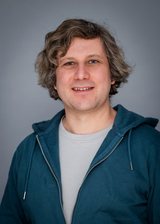
At the beginning of 2026, I took up a position as Cooperative Professor of Earth System Modeling and Tropical Coastal Systems at the University of Bremen and the Leibniz Centre for Tropical Marine Research (ZMT).
Coming to Bremen means returning to the place where my journey into marine research began, with my physics studies from 2004 to 2009 and my diploma thesis with Dirk Olbers at the Alfred Wegener Institute. Here, and later during my doctoral work with Carsten Eden at the Helmholtz Centre GEOMAR in Kiel and the University of Hamburg, as well as during a postdoc in Delft, I worked in theoretical oceanography and idealized ocean modeling to improve our understanding of ocean turbulence.
Since 2017, at the University of Hamburg and the Max Planck Institute for Meteorology (MPI-M), I have focused on improving and extending the ocean component of climate models, and between 2022 and 2025 I led the Group for Complex Modeling and Extreme Computing at MPI-M together with Peter Korn. During this time, I worked extensively on the development and analysis of a new generation of high-resolution ocean and climate simulations, investigating small-scale ocean processes, Tropical Cyclones, and air-sea interactions.
With my experience in Earth system modelling, I now aim to also focus on tropical coastal systems at ZMT. I will continue to expand and improve Earth System Models to better represent key processes in tropical coastal regions. Furthermore, together with my team, I intend to place emphasis on ecological, biogeochemical, and socio-economic interactions in order to support policy decision-making and strengthen resilience in the Global South.
Working Group Earth System Modelling
Our group investigates new modeling techniques and strategies for understanding the climate system with a particular focus on representing ocean turbulence in tropical coastal regions. To achieve this, we run high-resolution simulations that directly capture as much of the turbulence spectrum as possible. For turbulent processes that remain unresolved, we develop and implement novel parameterizations.
Within this modeling framework, we study how turbulent transports of heat, energy, and tracers influence local circulation, biogeochemical dynamics, ecological processes, and the dispersion of pollutants. Our simulations also provide key input data for other research activities within ZMT and TropEcS, helping to connect the physical system with biogeochemical, ecological, and socio-economic perspectives.
Ultimately, our research aims to provide relevant information for coastal protection measures and economic adaptation strategies to face the implications of climate change in tropical coastal areas.
Publication List as PDF for download