


Protected by the dike: ZMT and METAscales Living Lab Wremen welcomed international visitors from 12 different countries at the North Sea Coast
A day of learning, exploring and exchanging across projects, disciplines and cultures
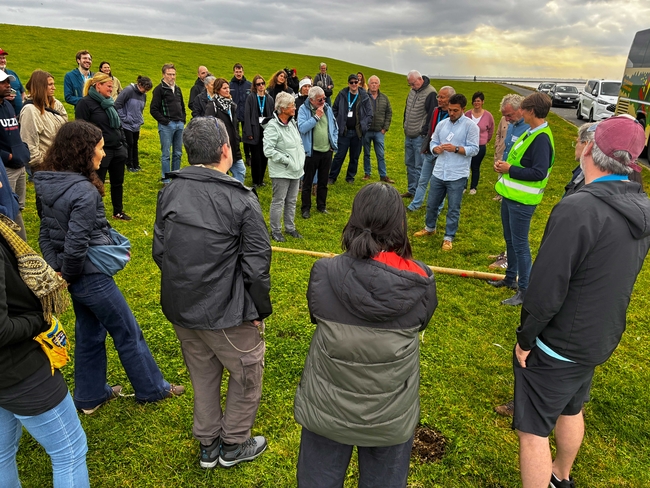
How can coastal communities become more resilient to climate change? That’s the question approximately 50 coastal experts and interested parties from 12 countries considered during an excursion to Wremen on Germany's North Sea coast. Organised by the METAscales Living Lab Wremen and the Leibniz Centre for Tropical Marine Research (ZMT) as part of the BEACONSplus project kick-off week, the visit brought together international scientists and practitioners with local experts and communities to exchange knowledge and learn about coastal protection, nature conservation, and community preparednessin the region.
The excursion marked the conclusion of a three-day kick-off meeting for BEACONSplus, a new EU-funded research and innovation project coordinated by ZMT. The project aims to help coastal communities on both sides of the Atlantic adapt to climate change and strengthen their coastal resilience. Bringing together 15 partner organisations from Brazil, Canada, France, Germany, Ghana, Ireland, Italy, South Africa and the United Kingdom, the consortium includes research institutes, universities, civil society organisations, and local government networks. The project has received €6 million in funding and runs from 1 July 2026 to 31 December 2029.
BEACONSplus consortium members arrived in Wremen on October 16 – the beginning of the storm surge season when coastal protection becomes particularly important for communities along the German North Sea coast. This provided a timely opportunity to explore how the region is preparing for coastal hazards that are becoming increasingly more frequent and severe, and how they strengthen its resilience to such events, and climate change in general.
The excursion began at the Wremen Visitors Centre where participants were introduced to the region and the work of the Living Lab Wremen, an initiative established within the project METAscales as part of the German Marine Research Alliance (DAM) research mission, mareXtreme, to combine scientific research, practical experience and local knowledge in strengthening coastal resilience. Through exchanges with scientists, practitioners, and community members, the BEACONSplus team learned about regional challenges, ongoing research, and locally developed solutions.
Regional practitioners guided the group along the coastline to explore two closely connected aspects of coastal management: technical coastal protection and the conservation and restoration of natural coastal habitats. At an exposed section of the dike and the headquarters of the local dike association, participants learned about the region's coastal protection infrastructure and how it’s managed. They also walked through an area earmarked for large-scale salt marsh restoration in the Wadden Sea National Park, which offered a different perspective and highlighted the role of natural ecosystems in coastal protection, climate change mitigation and nature conservation. The full-day excursion, which included talks from scientists and input from the local mayor, representative from the dike association (Deichverband Land Wursten) and the Wadden Sea National Park (Nationalpark Wattenmeer) provided opportunities to share experiences and explore common challenges faced by coastal communities along the German North Sea coast and elsewhere in the Atlantic region.
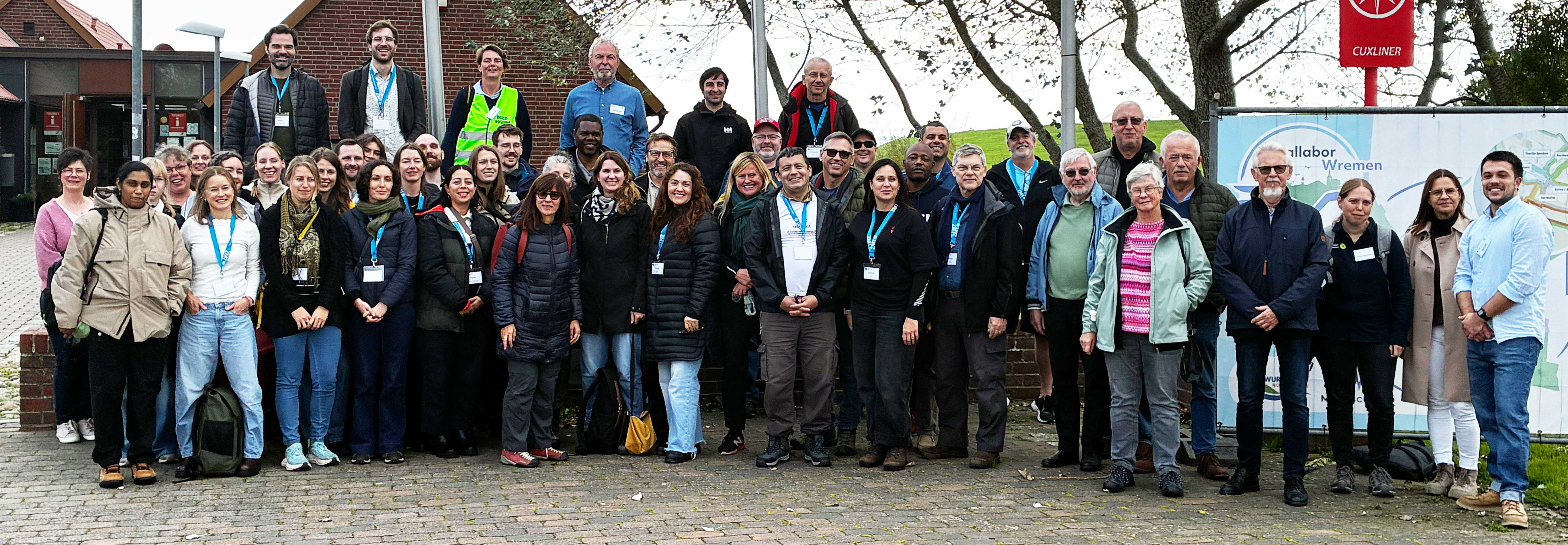
Wremen is one of two German Bight Beacon Sites; the other is Nordstrand. Both are located on the storm surge-prone North Sea coasts of Lower Saxony and Schleswig-Holstein. Despite their local differences, both face growing risks from natural hazards, marine extremes, and compound events. To strengthen coastal resilience, the METAscales project has established Living Labs at both sites. The Living Labs bring together scientists, civil society, local authorities and practitioners to jointly develop risk management strategies that integrate community-based disaster risk management and adaptation measures in coastal protection.
This connection to the Beacons Sites network made Wremen a fitting destination for the BEACONSplus participants. By bringing together representatives from different coastal regions, the visit highlighted the importance of linking local knowledge and practical experience with international scientific collaboration. It also provided the perfect conclusion to a productive week of collaboration, knowledge-sharing, and cultural exchange for the BEACONSplus partners.
To learn more about BEACONSplus, visit beacons-plus | All-Atlantic Coastal Resilience Hub
To learn more about Coastal Living Labs in Wremen and Nordstrand, visit German Bight – Coastal Living Labs in Wremen and Nordstrand
To learn more about, METAscales, visit Informationen über das Verbundprojekte METAscales der Forschungsmission mareXtreme
To learn more about mareXtreme, visit mareXtreme | Marine Extremereignisse
To learn more about the German Marine Research Alliance (DAM) visit DAM | Forschung
 Programme Areas
 Working Groups